
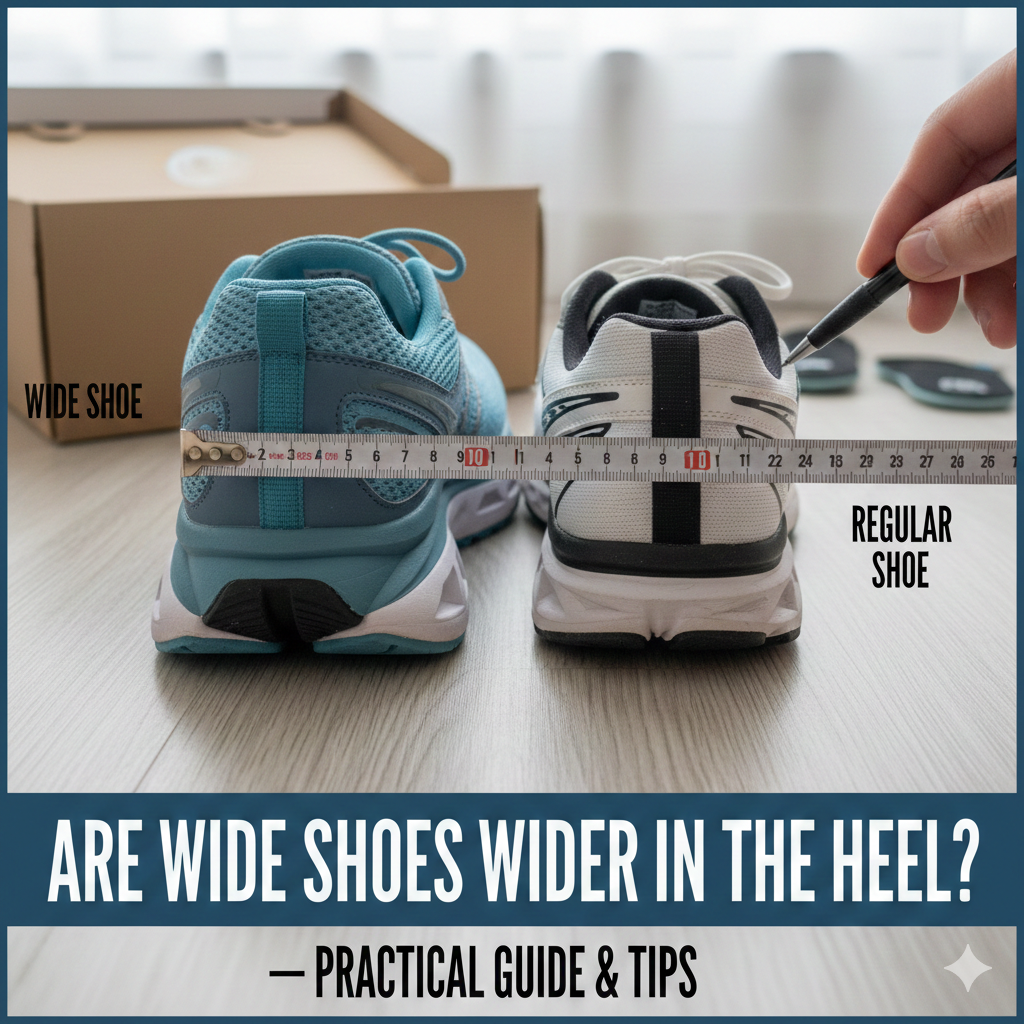
Wide shoes are often recommended for people with foot pain, bunions, flat feet, or simply feet that don’t fit comfortably into standard footwear. But one question comes up again and again in our shoe care and fitting conversations:
Are wide shoes actually wider in the heel—or just in the front?
Closely followed by another important question:
How much wider are wide shoes compared to regular shoes?
If you’ve ever tried wide shoes and still felt heel slipping, instability, or an awkward fit, you’re not imagining things. Wide-width footwear is often misunderstood, and not all wide shoes are designed the same way.
In this practical guide, we’ll break down everything you need to know about wide shoes, how they’re constructed, where the extra width is added, and how to choose the right wide shoe for your foot shape—without sacrificing comfort or support.
What Does “Wide Shoes” Actually Mean?
When a shoe is labeled “wide,” it doesn’t mean the entire shoe is evenly expanded in every direction. Instead, width adjustments are made in specific areas of the shoe, depending on standard footwear design principles.
Most wide shoes are designed to accommodate:
- A wider forefoot
- A broader toe box
- Increased volume across the ball of the foot
This is because the forefoot is where most width-related discomfort occurs.
However, the heel is a different story.
Are Wide Shoes Wider in the Heel?
The Short Answer:
Usually, no—or only slightly.
Most wide shoes are not significantly wider in the heel. In fact, many wide-width shoes are intentionally designed with a standard or only marginally wider heel.
Why the Heel Is Treated Differently
From a shoe-fitting and foot-health perspective, the heel plays a critical role in:
- Stability
- Proper gait alignment
- Preventing slipping and blisters
If the heel were widened too much, the shoe would:
- Feel unstable
- Slip during walking
- Increase friction and heel blisters
- Reduce overall support
For this reason, footwear brands usually keep the heel relatively snug—even in wide-width shoes.
Where Wide Shoes Are Actually Wider
Wide shoes are primarily wider in these areas:
1. The Toe Box
This is where most people feel relief immediately. Wide shoes provide extra room for:
- Toes to spread naturally
- Bunions and hammertoes
- Reduced pressure and rubbing
2. The Ball of the Foot
The widest part of the foot sits across the ball. Wide shoes add extra width here to reduce:
- Pinching
- Hot spots
- Nerve compression
3. The Upper (Volume, Not Just Width)
Wide shoes often have more overall depth, which helps people with:
- High insteps
- Swelling
- Orthotics
The heel, however, typically remains close to standard width.
So Why Do Some Wide Shoes Feel Loose in the Heel?
This is one of the most common complaints we hear—and it’s usually due to foot shape mismatch, not poor shoe design.
Here’s why it happens:
1. Wide Forefoot + Narrow Heel (Common Foot Shape)
Many people naturally have:
- Wide toes and forefoot
- Narrow or average-width heels
When they size up to a wide shoe for toe comfort, the heel may feel loose.
2. Increased Shoe Volume
Wide shoes often have more internal space overall. Even if the heel width isn’t much wider, the extra volume can make the heel feel less secure.
3. Incorrect Width Selection
Some people choose wide shoes when they actually need:
- A standard width with a roomy toe box
- A different shoe shape or last
- Adjustable features like laces or straps
How Much Wider Are Wide Shoes, Really?
The exact difference depends on shoe size and brand, but there are general standards used in footwear manufacturing.
Men’s Shoe Width Comparison (Approximate)
- D (Standard): Regular width
- EE / E (Wide): About 6–8 mm wider across the ball of the foot
- EEE / EEE (Extra Wide): Even wider, depending on brand
Women’s Shoe Width Comparison (Approximate)
- B (Standard): Regular width
- D (Wide): About 5–7 mm wider at the forefoot
- EE (Extra Wide): Significantly wider, often with more depth
These measurements are focused mainly on the ball of the foot, not the heel.
Are There Wide Shoes That Are Wider in the Heel?
Yes—but they’re less common.
Some specialty footwear brands design shoes specifically for people who have:
- Wide heels
- Swelling throughout the entire foot
- Medical or orthopedic needs
These shoes are often labeled as:
- “Wide fit with wide heel”
- “Full-volume shoes”
- Orthopedic or comfort footwear
They may include features like:
- Deeper heel cups
- Adjustable heel straps
- Custom-fit systems
However, for everyday shoes, the heel is usually kept closer to standard width.
How to Tell If You Actually Need Wide Shoes
You likely need wide shoes if you experience:
- Toe crowding or overlapping
- Pressure on the sides of your forefoot
- Redness or numbness after walking
- Shoes feeling tight across the ball of the foot
You may not need wide shoes if:
- Your toes have room, but your heel slips
- Shoes feel loose except at the heel
- You’re sizing up for length just to gain width
In these cases, a different shoe shape—not a wider shoe—may be the solution.
Practical Tips for Wearing Wide Shoes Without Heel Slipping
If you need wide shoes for your forefoot but struggle with heel looseness, these tips help significantly:
1. Use Heel Grips or Heel Liners
These add cushioning and reduce slippage without affecting forefoot space.
2. Look for Lace-Up or Adjustable Shoes
Laces, straps, or buckles allow you to:
- Secure the heel
- Customize fit across the foot
3. Choose Shoes with Structured Heel Counters
A firm heel counter provides stability and reduces movement.
4. Avoid Sizing Up in Length
Never go longer just to gain width—it almost always worsens heel fit.
5. Consider Brands Known for Anatomical Fits
Some brands naturally design shoes with:
- Wider toe boxes
- Secure heels
- Better balance between width and support
Wide Shoes vs. Wide Toe Box: Not the Same Thing
This distinction matters more than most people realize.
- Wide shoes: Wider across the forefoot and sometimes higher in volume
- Wide toe box shoes: Extra room for toes, but standard midfoot and heel
If your main issue is toe crowding, a wide toe box may be a better solution than full wide-width shoes.
Do Boots and Dress Shoes Handle Width Differently?
Yes—and this often explains mixed experiences with wide shoes.
Wide Boots
- Often feel more forgiving
- Better heel hold due to ankle support
- More adjustable with laces
Wide Dress Shoes
- Less forgiving
- Heel fit becomes more noticeable
- Construction matters greatly
For dress shoes, proper last shape is just as important as width.
Common Myths About Wide Shoes
Here are 3 most common myths about wide shoes you should know for free from us;
Myth 1: Wide Shoes Are Big Everywhere
Reality: Width is targeted, not universal.
Myth 2: Wide Shoes Are Only for People with “Big Feet”
Reality: Foot width has nothing to do with foot size.
Myth 3: Heel Slipping Means the Shoes Are Too Big
Reality: It often means the shoe shape doesn’t match your foot.
Final Thoughts from a Shoe Care & Fit Perspective
So, are wide shoes wider in the heel?
Most of the time, no—not significantly. And that’s by design.
Wide shoes focus on relieving forefoot pressure while maintaining heel stability. When heel issues arise, they’re usually the result of foot shape mismatch rather than a flaw in wide footwear itself.
Understanding how much wider wide shoes actually are—and where that width is added—makes all the difference in choosing footwear that feels supportive, comfortable, and secure.
The right wide shoe should:
- Relieve pressure where you need it
- Hold your heel comfortably
- Feel stable, not sloppy
- Improve comfort with every step
