
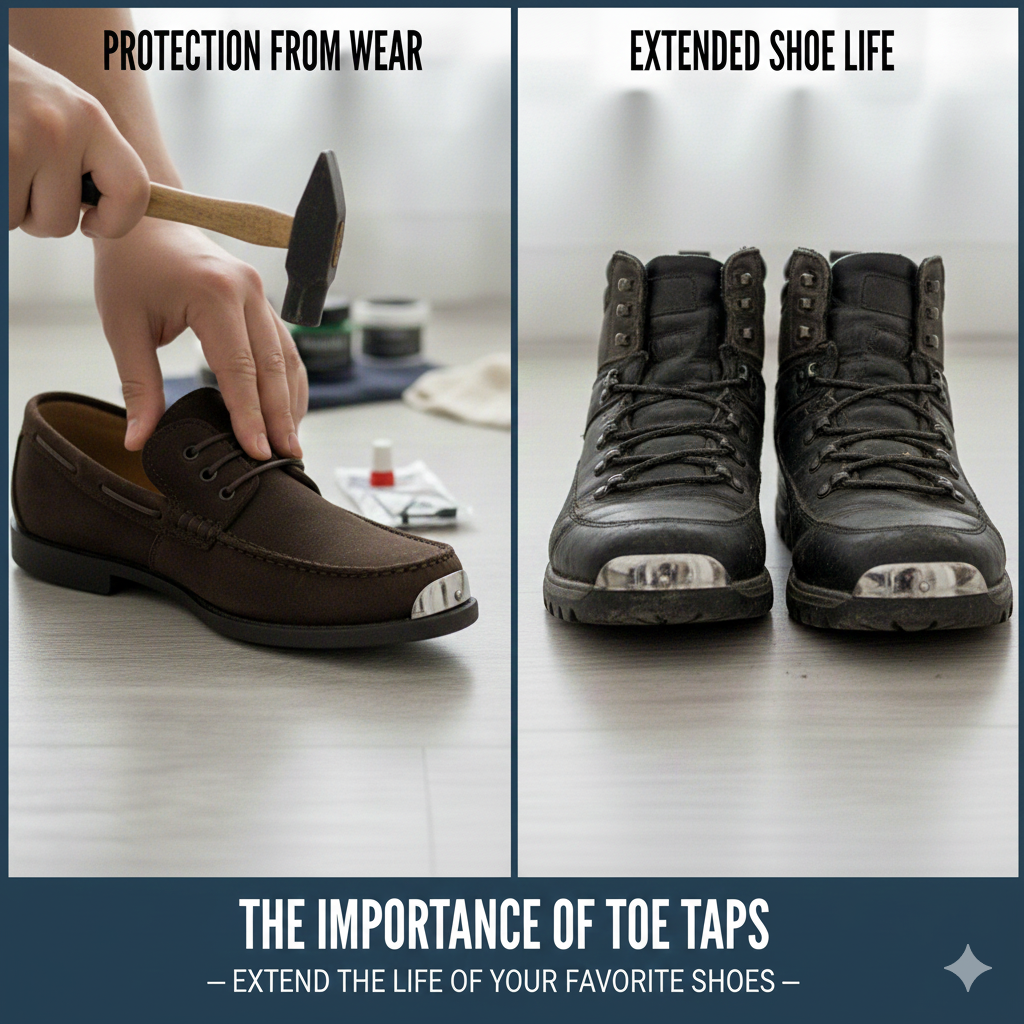
I have spent many years handling shoes in all conditions. Fresh from the box. Worn to the bone. Hand-welted beauties. Old workhorses with stories spilled across their leather. And among all the little details I’ve learned to appreciate, toe taps might be the one most people ignore until they need them badly. They seem small and almost unnecessary at first glance. A sliver of metal or rubber sitting at the front edge of a sole. What difference could that possibly make?
Quite a lot, actually.
Toe taps are one of those things you appreciate only after you have owned a well-made pair of shoes long enough to understand how the toe area wears. Or after you’ve taken your favorite pair to a cobbler and heard the heartbreaking words: “The toe has worn through, and the welt is damaged.” Once you hear that once, you never forget it. Suddenly, the little toe tap you previously dismissed as a fancy extra becomes something you wish you had installed from day one.
That is why I am writing this. Not from a corporate manual and not from a design studio boardroom. I’m writing from the bench, from the workstation stained with polish, glue, and memories of shoes I’ve restored over and over again. I’ve seen the difference toe taps make, and if you care about the longevity of your footwear, you should know about it too.
What Are Toe Taps, Really?
Toe taps are reinforcements installed at the very front of a shoe’s outsole, right where the toe strikes the ground during walking. You will find two main types: metal and rubber. Each has its purpose, and each suits a different personality or walking style.
Metal toe taps are usually made of steel or brass. They create that familiar clicking sound when you walk across a hard floor. Some people love that sound because it feels like authority, like wearing the sort of shoes that were meant to last. Others find it too loud. But in terms of pure durability, nothing beats metal toe taps.
Rubber toe taps sit on the quieter side of the family. They offer protection without sound, and they provide a bit more traction than metal. If you’re the type who wants practical reinforcement without calling attention to yourself, rubber toe taps make sense.
Regardless of the material, the point is the same: the front of every leather sole wears down faster than any other part of the shoe, especially if you walk with a pronounced toe strike. A tap acts as a shield, absorbing that friction so the leather itself doesn’t get eaten away.
Why The Toe Wears First
Most people don’t realize how much pressure they put on the toe area. The toe is the first part of the sole to meet the ground, and with every step, it grinds just a bit more than the rest of the shoe. On a leather sole, that wear becomes visible fast. I’ve seen brand new Goodyear welted soles lose a noticeable amount of thickness at the toe after only a few days of hard walking.
City pavements, especially, are unforgiving. Concrete and rough pavement scrape leather like sandpaper. A few walks across a gravel parking lot, and you’ll see fraying edges at the toe. Without reinforcement, that thinning creeps up quickly until the welt is exposed. Once the welt goes, the whole repair becomes more complicated and more expensive.
That is why toe taps matter. They are not there for decoration. They are there because the toe area needs help.
How Toe Taps Protect the Welt and Soles
The welt is the bridge between the upper and the sole. You damage the welt, and you shorten the shoe’s lifespan dramatically. Toe taps prevent the toe portion of the sole from thinning down to the welt. Instead of leather taking the hit, the metal or rubber takes it.
Imagine wearing a pair of shoes with no toe tap. After months of walking, the front of the sole becomes slanted, thin, and uneven. That uneven wear eventually forces a partial resole or, in worse cases, a full one.
But with taps installed early, the sole stays level. The shoe wears evenly, and the welt stays completely untouched. Shoes last longer. Resoling happens on your schedule, not forced by damage.
As someone who has resoled shoes for decades, I can confidently tell you that the shoes with toe taps always come to the shop in better shape. They age gracefully. They show wear everywhere except the toe, which stays perfectly safe under its protective armor.
Metal vs Rubber Toe Taps: Choosing The Right One
This is a question I hear often. Which is better? There’s no single answer. It depends on your needs and your personality as a wearer.
Metal Toe Taps
Metal taps are for people who want maximum durability. They stand up to heavy use and harsh pavement. They’re ideal if you walk long distances, commute daily through busy streets, or own leather soled shoes you want to keep in rotation for a decade or more.
They do have a sound. That clicking noise. Some love it and feel it adds character. Some dislike it. But in terms of protection, metal is unmatched.
Metal taps work especially well on:
- Leather soled dress shoes
- Hand welted shoes
- Goodyear welted oxfords
- Derbies with thicker soles
- Boots with leather outsoles
They don’t wear out fast. And when they finally do wear thin, replacing them is simple.
Rubber Toe Taps
Rubber taps are better for people who want a quieter or slightly more subtle reinforcement. They still protect the toe, but they offer a bit more grip and a softer landing underfoot.
Rubber taps work well on:
Shoes worn in offices
Slippery floors
Quiet environments
Shoes with already flexible soles
They also blend visually with the sole, so if aesthetics matter and you don’t want metal showing, rubber is a nicer option.
When Should Toe Taps Be Installed?
If possible, install them while the shoes are still new. I cannot tell you how many people wait until they see wear at the toe before they come in. By then, the leather has already thinned, and you’re no longer installing taps to prevent damage but to stop further deterioration.
A brand new sole provides a clean starting point. The tap lies flat. It fits perfectly. It looks like part of the original build.
But even if your shoes aren’t new, as long as the toe hasn’t worn down to the welt, you can still install taps after a little leveling work.
The rule is simple: the earlier, the better.
Are Toe Taps Only For Expensive Shoes?
No. Toe taps are for any shoes with leather soles, whether they cost one hundred or one thousand dollars. Expensive shoes benefit even more, since their construction is meant to last.
Think of toe taps as insurance on an investment. Why spend hundreds or thousands on well made footwear if you’re going to let the sole wear down prematurely?
Even mid tier leather shoes last longer with taps. And if you’re someone who rotates only a small number of pairs, taps help lighten the load.
What About Rubber Soled Shoes?
Rubber soles usually do not need toe taps. They have built in durability and traction. A metal tap on rubber doesn’t make sense structurally, and most rubber soles already include toe design elements to handle wear.
Toe taps are strictly a leather sole conversation. If you wear mostly rubber soled shoes, feel free to skip toe taps entirely.
How Long Do Toe Taps Last?
Metal toe taps can last years. I’ve installed taps on someone’s shoes and seen them come back only after years of weekly wear. Rubber taps wear out faster, but they are still good for long stretches depending on your walking habits.
Here’s what affects their lifespan:
- Walking style
- Surface type
- Weight distribution
- Daily distance
A toe dragger will eat through taps faster. Someone who walks lightly will see them last longer.
Can Toe Taps Damage a Shoe?
Only when installed incorrectly. That’s why you need a skilled cobbler. A badly installed metal tap can stick out too far and snag. It can also be screwed in at the wrong angle.
But when installed properly, toe taps do not harm the shoe in any way. In fact, they prevent harm.
Ask your cobbler how they install them. They should plane the leather evenly, sink the tap flush into the toe, and make sure every screw sits perfectly flat.
Real Shoes I’ve Seen Saved by Toe Taps
I’ll never forget a pair of Edward Greens that came into my shop years ago. The owner had worn them for less than a month, and the toe was already shaved down like the edge of a worn pencil. He walked heavily on concrete. You could see the welt beginning to peek through.
We leveled the front, installed toe taps, and told him to check back in six months.
He returned two years later, taps worn but soles still healthy. He had saved himself a resole, and the shoes remained almost pristine.
Another time, a lawyer brought in a pair of Carminas he wore to court daily. He paced a lot. He dragged his toes a bit. Without taps, those shoes wouldn’t have lasted a year. With taps, he’s been wearing them for five years and counting.
Toe taps save soles. The difference is not theoretical. It is visible, measurable, and proven by years of observation.
Toe Taps and Weather Conditions
If you live in a wet climate, toe taps become even more important. Here’s why:
Wet leather wears down faster
Pavement becomes more abrasive when wet
Softened leather loses structure
Toe taps act like a barrier from moisture abrasion, especially at the point where the sole is most vulnerable.
Do Toe Taps Change The Feeling of the Shoe?
Some people notice a slight change at first, especially with metal taps. You might feel a tiny click at the toe when you walk across a hard surface. But after a day or two, it becomes completely normal.
Rubber taps feel natural right from the start, almost invisible underfoot.
Can You Install Both Toe Taps and Heel Plates?
Yes, and many people do. Heel plates protect the back of the sole the same way toe taps protect the front. If you’re someone who wears through heels fast, heel plates can even out the wear and extend the life of the entire sole.
Some people choose metal heel plates as well, though rubber is more common at the heel because it reduces slipping.
Toe Taps Pair Well With Sole Guards
If you want maximum sole longevity, combine toe taps with full rubber sole guards. The guard covers the midsole, and the tap protects the front. Together, they let you enjoy the look of a leather welt with the practicality of long-term durability.
When Toe Taps Might Not Be Necessary
Toe taps are not mandatory for everyone. Here are a few exceptions:
You rarely walk outdoors
Your shoes are worn on carpets most of the time
You rotate many pairs
You don’t walk with a heavy toe strike
But in any lifestyle involving pavement, public streets, commuting, city living, or long walks, taps become invaluable.
The Truth: Toe Taps Are Cheap Insurance
People spend money on creams, polishes, brushes, shoe trees, edge dressing, conditioners, sole guards, bags, and dozens of related accessories. Toe taps cost less than most of these items, yet they offer one of the highest returns in longevity.
They extend the life of the sole
They maintain the shape of the toe
They protect the welt
They reduce long term resole costs
They keep the shoe looking sharper
They prevent premature thinning
If there is one upgrade every leather sole should have, toe taps are it.
Final Thoughts From Someone Who Has Seen Both Sides of Shoe Longevity
I’ve repaired shoes whose owners took care of them religiously, and shoes whose owners never thought twice. Toe taps turn up over and over again in the group that lasts longer. They give the shoe a fighting chance against the pavement and daily wear. They protect the work the maker put into stitching and shaping that sole. They add months or even years of use before the first resole.
If you care about your shoes, if you value their structure, and if you enjoy wearing them enough to want them to age slowly and gracefully, toe taps are one of the smartest decisions you can make. They don’t change the look of the shoe. They don’t interfere with comfort. They simply stand guard, day after day, taking the beating your soles shouldn’t have to take.
And if a little piece of metal or rubber can save you hundreds down the line, isn’t it worth considering?
