
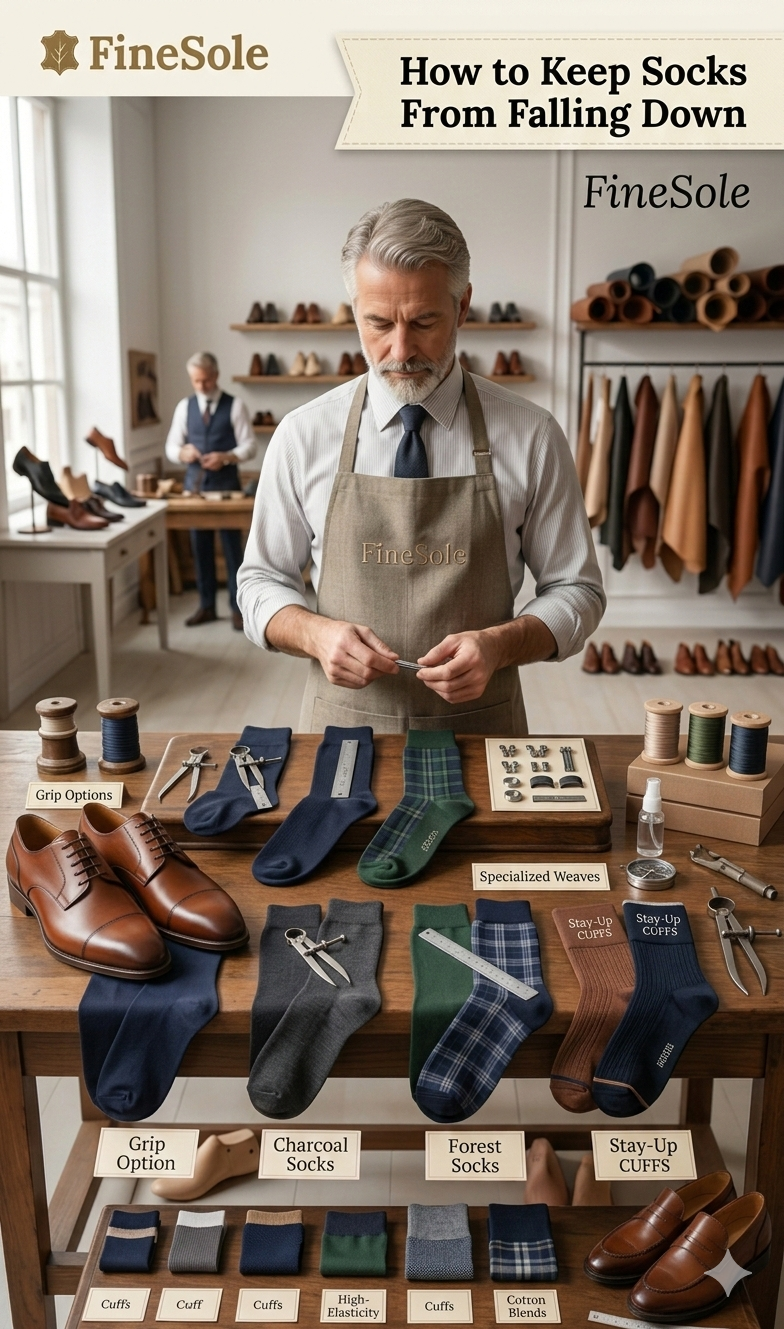
If you have ever taken ten steps and felt your sock slowly sliding into your shoe, you know how irritating it can be. I have seen it happen with brand-new socks and expensive footwear alike. One minute everything feels snug, the next minute you are bunching fabric under your heel and wondering what went wrong. Sock slippage is one of those small problems that quietly ruins comfort all day.
After years of working with shoes and listening to customers complain about fit issues, I can tell you this truth. Socks rarely fall down for just one reason. It is usually a mix of poor sizing, worn elastic, shoe fit, and fabric choice. Many people keep buying new socks without fixing the real cause. That is money down the drain and frustration that keeps coming back.
The good news is that you can fix this problem quickly once you understand what is actually happening inside your shoe. Below are the most reliable, real-world solutions I recommend to keep your socks in place from morning to night.
Quick Answer: How to Keep Socks From Falling Down
If your socks keep slipping, do these first:
- Choose the correct sock size for your shoe size
- Avoid stretched-out or worn elastic
- Look for socks with arch support bands
- Make sure your shoes fit properly
- Wash socks correctly to preserve elasticity
Most people see immediate improvement once they fix sizing and elastic quality.
Why Socks Keep Falling Down
Before jumping into solutions, it helps to know the usual culprits. From what I have seen over the years, sock slippage almost always traces back to one of these.
Common Causes
- Socks too large for your foot
- Weak or worn elastic
- Cheap, low-friction fabric
- Shoes that are too loose
- Overstretched socks from hot washing
- Very smooth or sweaty feet
If you fix the root cause instead of guessing, the problem usually disappears.
10 Final Solutions to Keep Socks From Falling Down
Let us walk through the fixes that actually work in real life.
1. Buy the Correct Sock Size
This sounds obvious, but it is the number one mistake.
Many people wear “one size fits all” socks that are actually too big. When the fabric has extra length, it has nowhere to go except downward into your shoe. Always match the sock size to your actual shoe size range.
Pro tip from the bench
If you are between sizes, go slightly smaller rather than larger for a snug fit.
2. Look for Socks With Arch Support Bands
Quality socks often include a compression band around the midfoot. This small feature makes a huge difference.
It grips the foot gently and prevents the sock from migrating downward during walking. Athletes’ socks use this design for a reason. It works.
3. Avoid Worn-Out Elastic
Elastic does not last forever. After enough washes, it loses its memory.
Signs your socks are worn out
- Loose opening at the top
- Socks slide down quickly
- Fabric looks stretched
- Sock feels thin and tired
If you see these signs, replacement is usually the best fix.
4. Choose Better Sock Materials
Fabric plays a bigger role than most people realize.
Best Materials for Staying Up
- Cotton blends with spandex
- Merino wool blends
- Performance synthetic blends
Materials That Slip More
- Very thin polyester
- Cheap acrylic blends
- Overly silky dress sock fabrics
From experience, socks with at least a small percentage of elastane or spandex hold their shape much longer.
5. Make Sure Your Shoes Fit Properly
Here is something many people overlook. Loose shoes allow socks to move around.
If your heel lifts or your foot slides inside the shoe, the sock will bunch and fall. Proper shoe fit supports the sock and keeps everything aligned.
Quick shoe fit check
- Heel should feel secure
- Toes should have room but not swim
- Foot should not slide forward
6. Wash Socks the Right Way
I have seen perfectly good socks ruined in the laundry.
Washing Tips That Preserve Elastic
- Use warm or cool water
- Avoid high heat drying
- Skip harsh bleach
- Turn socks inside out
High heat is the silent killer of elastic. Once it breaks down, socks rarely recover.
7. Try Sock Garters for Dress Wear
If you wear dress socks for formal outfits, sock garters are still one of the most reliable solutions.
They gently hold the sock up without damaging the fabric. Old school? Maybe. Effective? Absolutely.
This works especially well for very thin dress socks that naturally slide more.
8. Use Socks With Silicone Heel Grip
For no show or low cut socks, look for silicone grip strips at the heel.
These small rubberized areas create friction against your skin and prevent the sock from sliding under your heel. In my experience, this feature dramatically improves performance.
9. Replace Old Socks in Batches
People often keep socks far longer than they should.
If most of your pairs are more than a year old and heavily worn, elasticity may already be compromised across the board. Replacing them in batches ensures consistent performance.
10. Consider Foot Moisture Control
Sweaty feet reduce friction and encourage slippage.
Simple fixes
- Use foot powder
- Choose moisture wicking socks
- Rotate shoes daily
- Let shoes fully dry
Dry feet create better grip between sock and skin.
Common Mistakes That Make Socks Slip
Over the years, these habits keep showing up.
- Buying cheap multi packs without checking fabric
- Over drying socks on high heat
- Wearing socks that are too large
- Ignoring shoe fit problems
- Keeping stretched socks too long
Fix these and most sock problems disappear.
Expert Tips From a Footwear Perspective
From someone who has handled thousands of shoes and socks, here is what matters most.
- Snug fit beats thick fabric
- Elastic quality matters more than brand name
- Shoe fit and sock fit work together
- Heat is the enemy of elasticity
- Performance socks usually outperform basic cotton
If you focus on these fundamentals, your socks will stay put far more consistently.
FAQs About How to Keep Socks From Falling Down
Why do my socks fall down in my shoes?
Socks usually fall down due to improper sizing, worn elastic, loose shoes, or low-quality fabric. Identifying which factor is causing the issue helps you fix it quickly.
Do tighter socks stay up better?
Yes, properly snug socks with good elastic tend to stay up better. However, they should not be so tight that they restrict circulation or feel uncomfortable.
How long should socks last before the elastic fails?
With proper care, quality socks typically maintain elasticity for six to twelve months of regular use. High-heat drying can shorten this lifespan significantly.
Are no-show socks more likely to slip?
Yes. No-show socks have less fabric coverage and rely heavily on heel grips and proper sizing. Choosing pairs with silicone grips greatly reduces slipping.
Can a shoe fit affect whether socks fall down?
Absolutely. Loose shoes allow foot movement inside the shoe, which can cause socks to bunch and slide down during walking.
Final Thoughts
Keeping your socks from falling down is rarely about luck. It comes down to fit, fabric, and proper care. After years around footwear, I have seen that most slipping issues disappear once people switch to correctly sized socks with strong elastic and pair them with properly fitted shoes.
Start with sizing, check your elastic, and treat your socks a little better in the wash. Small adjustments make a big difference in daily comfort. The real question is this. When your socks start slipping, are you replacing the symptom or finally fixing the cause?
