
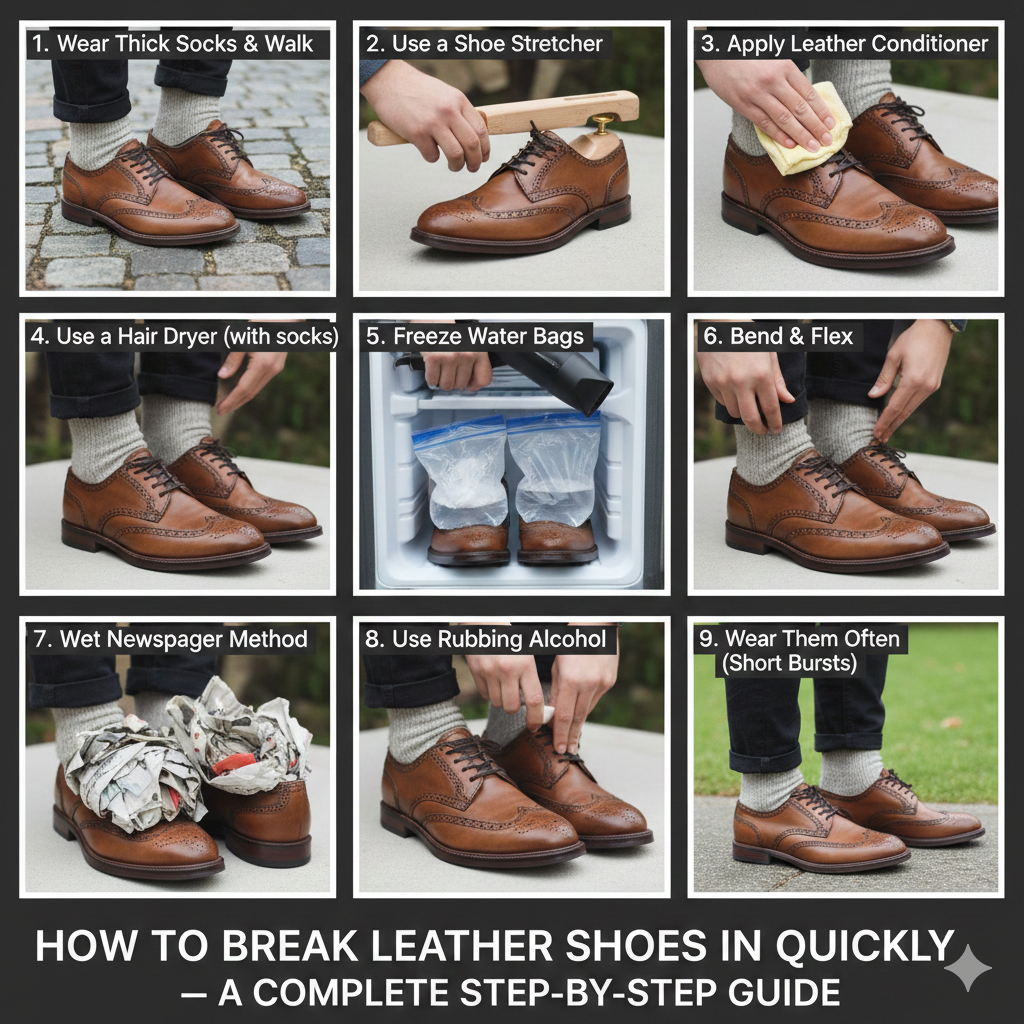
New leather shoes are one of life’s simple pleasures. They look polished, feel premium, and instantly elevate your outfit. But as good as they look, new leather shoes often come with a problem—stiffness. Tight heels, rigid uppers, and unforgiving soles can turn a stylish purchase into a painful experience.
Many people believe discomfort is unavoidable and that leather shoes must be “suffered through” before they become comfortable. That’s not true. Leather does need time to soften and mold to your feet, but with the right approach, you can break leather shoes in quickly without blisters, damage, or regret.
This guide walks you through safe, proven, and practical methods to soften leather shoes faster—whether you’re wearing dress shoes, boots, or heavy-duty work shoes.
Quick Answer: How Do You Break Leather Shoes in Quickly?
To break leather shoes in quickly, wear them indoors with thick socks, apply gentle heat to tight areas, condition the leather, walk short distances outside, and protect pressure points from blisters. Avoid soaking shoes or using extreme heat, as these can permanently damage leather.
Why Leather Shoes Feel Stiff When New
Leather is a natural material made from animal hide. When shoes are new, the leather fibers are firm and structured to maintain shape and durability. This stiffness is intentional—it ensures the shoes last longer and age well.
However, until leather:
- Warms up
- Flexes repeatedly
- Absorbs slight natural moisture
…it won’t move comfortably with your feet. Breaking in leather shoes is simply the process of helping the leather relax gradually, not forcing it.
High-quality leather often starts stiffer but becomes far more comfortable once broken in.
Step One: Make Sure the Shoes Actually Fit
Before attempting to break in leather shoes, confirm the size is correct.
Leather can stretch slightly in width, but it will not significantly increase in length. If your toes are cramped or your heel hangs over the edge, the shoes are the wrong size.
A proper fit means:
- Toes have room to move
- Heel feels snug but not painful
- The shoe feels firm, not tight
Breaking in improves comfort—not poor sizing.
Step-by-Step Guide to Breaking in Leather Shoes Quickly
Step 1: Wear Leather Shoes Indoors First
Start slow. Wear your leather shoes indoors for 15–30 minutes at a time.
Walk around on carpets or soft flooring to:
- Warm the leather
- Create natural flex points
- Identify pressure areas early
Repeat this daily for a few days before wearing them outside.
Step 2: Use Thick Socks to Speed Up the Process
Thick socks are one of the safest ways to loosen stiff leather.
Put on one or two pairs of thick socks, then wear the shoes indoors. The extra padding increases pressure inside the shoe, encouraging the leather to stretch gently.
This method works especially well for:
- Tight toe boxes
- Narrow uppers
- Snug insteps
Avoid long outdoor walks at this stage.
Step 3: Apply Gentle Heat (With Care)
Leather becomes more flexible when warm. Controlled heat can help stubborn areas soften faster.
How to do it:
- Wear thick socks and the shoes
- Use a hair dryer on low or medium heat
- Warm tight areas for 20–30 seconds
- Flex your feet gently while heating
Never overheat leather. If it feels hot to the touch, stop immediately.
Step 4: Condition the Leather to Reduce Stiffness
Dry leather is stiff leather. Conditioning helps soften the fibers and prevents cracking.
Apply a small amount of leather conditioner to:
- The vamp (top front)
- Heel area
- Sides where the shoe feels tight
Massage gently with a soft cloth and allow the shoes to rest for several hours or overnight.
Well-conditioned leather breaks in faster and lasts longer.
Step 5: Take Short Outdoor Walks
Once the shoes feel more flexible indoors, start wearing them outside.
Begin with:
- 10–20 minute walks
- Flat, even surfaces
- Minimal standing time
Gradually increase wear time over several days.
Step 6: Protect Your Feet from Blisters
Friction is common during the break-in phase. Protecting your feet helps you stay consistent.
Helpful options include:
- Heel grips
- Gel pads or insoles
- Blister plasters or bandages
- Petroleum jelly on hot spots
Preventing blisters keeps the process comfortable and faster overall.
Step 7: Use a Shoe Stretcher for Problem Areas
If certain spots remain tight, a shoe stretcher can help.
Insert the stretcher and expand it gradually. Leave it overnight or for up to 24 hours. Some stretchers allow targeted pressure at specific pain points.
This works well for:
- Narrow shoes
- Tight toe boxes
- Side pressure near the little toe
Stretch slowly to avoid damaging the leather.
Step 8: Rotate Shoes and Let Leather Rest
Wearing new leather shoes every day can slow progress.
Rotating shoes allows:
- Leather fibers to relax
- Moisture to evaporate
- Soles to recover their shape
Even alternating every other day makes a difference.
How to Break in Leather Boots Quickly
Leather boots are thicker and often stiffer than shoes, especially around the ankle.
Best methods for boots:
- Wear thick boot socks indoors
- Condition ankle and instep areas generously
- Use gentle heat only where stiffness is extreme
- Walk short distances to flex the sole
- Use a boot stretcher if needed
Boots take longer but reward patience with excellent comfort.
How to Break in Leather Dress Shoes
Dress shoes are sleek and structured, so aggressive methods can ruin their shape.
Best methods for dress shoes:
- Indoor wear on carpet first
- Light conditioning only
- Heel grips to prevent rubbing
- Avoid over-stretching
Dress shoes should soften without losing their elegant structure.
How to Break in Leather Work Shoes or Safety Shoes
Work shoes are designed for durability, not instant comfort.
Best methods for work shoes:
- Rotate shoes daily
- Use cushioned insoles
- Focus on heel and toe flexibility
- Stretch tight areas gradually
Comfort improves significantly after the first week when broken in correctly.
Mistakes to Avoid When Breaking in Leather Shoes
Avoid these damaging shortcuts:
- Soaking shoes in water
- Freezing shoes with water inside
- Using alcohol or harsh chemicals
- Leaving shoes near heaters
- Applying extreme heat
These methods can crack leather, weaken glue, and permanently ruin shoes.
How Long Does It Take to Break in Leather Shoes?
It depends on:
- Leather quality
- Shoe construction
- Frequency of wear
General timeline:
- Initial comfort: 3–5 days
- Full break-in: 1–2 weeks
- Thick boots or work shoes may take longer
High-quality leather improves with time.
Signs Your Leather Shoes Are Fully Broken In
Your shoes are ready when:
- They flex naturally when walking
- Pressure points disappear
- No new blisters form
- The leather feels soft but supportive
At this stage, the shoes feel molded to your feet.
Caring for Leather Shoes After Break-In
To maintain comfort:
- Use shoe trees
- Condition leather periodically
- Let shoes rest between wears
- Clean moisture and dirt promptly
Good care ensures long-lasting comfort and appearance.
Frequently Asked Questions (FAQ)
How long does it take to break in leather shoes?
Most leather shoes take 3–5 days for basic comfort and up to two weeks to fully break in.
Can leather shoes be broken in without pain?
Yes. Gradual wear, thick socks, conditioning, and blister protection prevent pain.
Do leather shoes stretch over time?
Leather stretches slightly in width and flexibility but not in length.
Is heat safe for breaking in leather shoes?
Gentle heat is safe when used carefully. Excessive heat damages leather.
Are leather boots harder to break in than shoes?
Yes. Boots usually take longer due to thicker leather and ankle support.
Final Note
Final note for shoe lovers, breaking in leather shoes doesn’t have to be painful or time-consuming. This guide explains practical, proven ways to soften stiff leather shoes quickly while protecting both your feet and the shoes themselves. It walks readers through simple steps such as wearing shoes indoors, using thick socks, applying gentle heat, conditioning the leather, and gradually increasing outdoor wear.
The post also highlights common mistakes to avoid, explains how long the break-in process usually takes, and shows clear signs that leather shoes are fully broken in. In addition, it includes tailored advice for breaking in leather boots, dress shoes, and work shoes, recognizing that each type requires a slightly different approach.
Overall, the article helps readers achieve comfort faster, prevent blisters, and extend the life of their leather shoes—making it a practical, easy-to-follow resource for anyone dealing with stiff new footwear.
