
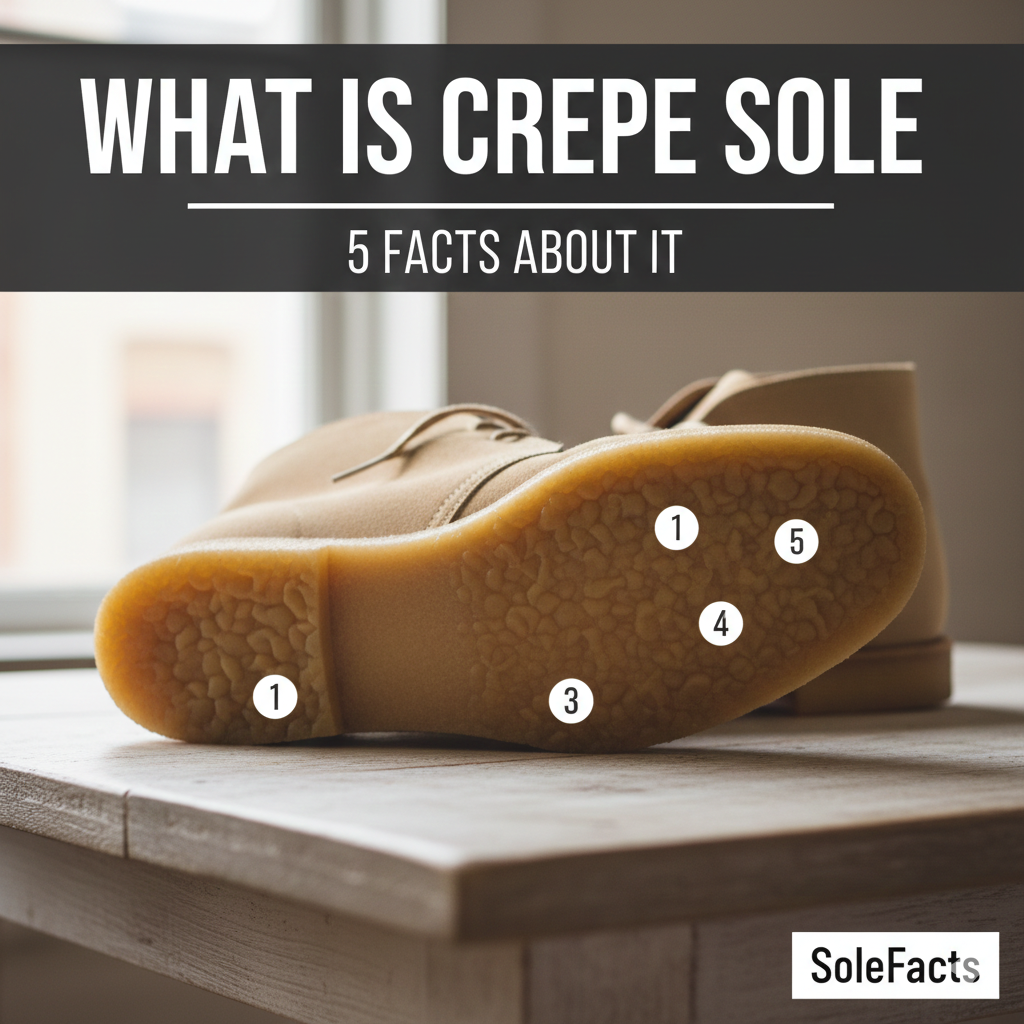
If you have ever picked up a pair of shoes, flipped them over, and felt that soft, slightly sticky sole with your fingers, there is a good chance you were holding shoes with a crepe sole. I still remember the first time I wore crepe sole shoes years ago. It was a desert boot that felt almost strange underfoot, like walking on firm gum at first. Comfortable, yes. Quiet, definitely. But also confusing. Were these soles durable? Would they last? Why did they look so different from rubber or leather soles?
Shoes crepe soles tend to divide people. Some swear by them for comfort and grip, while others complain about wear and tear or how quickly they pick up dirt. After years of wearing, repairing, and resoling shoes, I can say crepe soles are misunderstood. They are not bad soles, but they are honest soles. They tell you exactly what they are from the first step. If you expect them to behave like hard rubber or leather, you will be disappointed. If you understand their strengths, they can become one of your favorite sole types.
Read More: How Do I Waterproof Suede Boots During Rainy Season?
This guide is written from the point of view of someone who has seen crepe soles fresh out of the box, worn smooth after miles of walking, and peeled off shoes that were neglected. We will talk about what a crepe sole really is, how it compares to rubber soles, when it makes sense to choose one, and how to take care of it so it lasts as long as possible. If you have ever wondered whether shoes crepe sole options are worth your money, this article will clear the fog.
What Is a Crepe Sole?
A crepe sole is made from natural rubber that has been coagulated and pressed into thick sheets, then cut and shaped into shoe soles. Unlike synthetic rubber soles, crepe soles are not heavily processed or molded into complex patterns. That is why they look uneven, slightly cloudy, and sometimes even rough around the edges. That raw look is not a defect. It is the nature of crepe rubber.
In shoes, crepe soles are usually attached as a single thick piece or layered for extra height. They are commonly found on desert boots, chukka boots, loafers, and some casual dress shoes. You rarely see them on heavy work boots or athletic shoes because they are not designed for extreme conditions.
From a comfort standpoint, crepe soles are naturally cushioned. They compress slightly when you walk, absorbing shock in a way hard rubber cannot. That softness is what gives shoes crepe sole designs their signature feel. At the same time, that softness is also what affects durability, which we will get into shortly.
Why Shoemakers Still Use Crepe Soles Today
With so many modern sole materials available, people often ask why crepe soles still exist. The answer is simple. Comfort, grip, and character.
Crepe soles offer excellent traction on dry surfaces. The slightly sticky rubber grips pavement, tile, and indoor floors quietly and confidently. This makes them popular for everyday casual wear, especially in cities where people walk a lot. They are also flexible, which means the shoe bends naturally with your foot instead of fighting it.
From a shoemaker’s perspective, crepe soles are also forgiving. They do not require a long break in period like leather soles, and they work well with soft uppers like suede. That balance of softness above and below the foot creates a relaxed, easy wearing shoe that feels broken in almost immediately.
5 Important Facts About Crepe Sole Designs
Fact 1: Crepe Soles Are Made from Natural Rubber
This is the most important thing to understand. Crepe soles are not synthetic. They come from natural latex, which gives them their softness and grip. Because they are natural, they react to heat, moisture, and friction more than synthetic rubber does.
This means crepe soles can harden over time if stored improperly or exposed to extreme heat. On the flip side, they remain flexible and comfortable when cared for correctly. If you live in a hot climate and leave your shoes in a car often, crepe soles may age faster than expected.
Fact 2: Comfort Is the Biggest Advantage
If comfort is high on your list, shoes crepe sole options deserve attention. The cushioning effect reduces impact on your joints, especially during long walks. I have worn crepe sole boots on full day errands and felt less foot fatigue compared to harder soles.
They also mold slightly to your walking pattern over time. That subtle compression makes the shoe feel more personal with each wear. For people with sensitive feet or those who stand for long periods, this can be a game changer.
Fact 3: Crepe Soles Wear Faster Than Rubber Soles
Here is the honest downside. Crepe soles do not last as long as hard rubber soles, especially on rough surfaces. Concrete, gravel, and asphalt eat into crepe rubber faster than you might expect.
This does not mean they are poor quality. It simply means they are designed for comfort and flexibility, not rugged durability. If you walk several miles a day on rough sidewalks, you will notice wear sooner. The good news is that many crepe sole shoes can be resoled when the time comes.
Fact 4: Crepe Soles Pick Up Dirt Easily
Anyone who owns crepe sole shoes knows this frustration. The light colored rubber attracts dirt, dust, and stains like a magnet. After a few wears, that clean beige look starts turning darker and uneven.
While this does not affect performance, it does affect appearance. Some people embrace the worn look. Others prefer to clean their soles regularly. Knowing this upfront helps manage expectations and keeps disappointment away.
Fact 5: They Are Best for Casual and Smart Casual Shoes
Crepe soles shine in casual and smart casual footwear. Desert boots, loafers, and relaxed lace up shoes benefit the most. They are not ideal for formal dress shoes or heavy duty work boots.
Their softness pairs well with suede and soft leather uppers, creating shoes that feel relaxed rather than stiff. If you want structure and sharp lines, leather or hard rubber soles make more sense. If you want comfort and ease, crepe soles fit right in.
Crepe Sole vs Rubber Sole: What Is the Difference?
This comparison comes up all the time, and for good reason. Crepe sole vs rubber sole questions usually come down to comfort versus durability.
Rubber soles are typically synthetic and molded into specific tread patterns. They last longer, resist water better, and handle rough surfaces with ease. Crepe soles, on the other hand, are softer, quieter, and more flexible but wear faster.
Here is a simple breakdown:
- Crepe soles offer better immediate comfort and flexibility
- Rubber soles last longer and resist abrasion better
- Crepe soles grip well on dry surfaces but struggle in mud
- Rubber soles perform better in wet and uneven conditions
Choosing between them depends on how and where you plan to wear the shoes.
How to Break In Shoes with Crepe Soles
The good news is that crepe soles require very little break in. Most of the time, the upper leather dictates comfort more than the sole. That said, wearing them gradually is still smart.
Start with short walks to let the sole compress naturally. Avoid long, rough walks in the first few days. This allows the crepe rubber to settle evenly instead of wearing unevenly from day one.
If the shoe has a stiff upper, using a leather conditioner lightly can help soften things up without affecting the sole.
How to Clean and Maintain Crepe Soles
Cleaning crepe soles is more about managing expectations than restoring them to new. They will never look factory fresh for long, and that is okay.
For light dirt, use a soft brush or dry cloth. For deeper stains, a damp cloth with mild soap can help, but avoid soaking the sole. Excess water can affect the rubber over time.
Maintenance tips that help extend life:
- Avoid wet, muddy conditions when possible
- Store shoes in a cool, dry place
- Rotate shoes to reduce daily wear
- Avoid direct heat sources
Proper care slows wear and keeps the sole flexible.
Common Mistakes That Shorten Crepe Sole Lifespan
One mistake I see often is using crepe sole shoes as everyday beaters in harsh conditions. They are not built for constant abuse. Another is storing them in hot places, which causes the rubber to harden and crack.
Wearing them in heavy rain or mud also accelerates wear and staining. Crepe soles are happiest on dry ground, steady walks, and moderate use.
Can Crepe Soles Be Resoled?
Yes, in many cases. A good cobbler can replace worn crepe soles, especially on stitched shoes. This makes crepe sole shoes more sustainable than people think. Instead of tossing them, you can bring them back to life.
Resoling costs vary, but it is often worth it if the upper leather is still in good shape. This is one reason many classic desert boots remain in rotation for years.
FAQ: Shoes Crepe Sole Questions Answered
Are crepe soles good for everyday wear?
Crepe soles work well for everyday casual wear on dry surfaces. They offer excellent comfort and grip but wear faster on rough pavement. Rotating shoes helps extend their lifespan.
Do crepe soles get slippery?
On dry ground, crepe soles grip very well. On wet or muddy surfaces, they can lose traction. They are not ideal for rainy or slippery conditions.
How long do crepe soles last?
Lifespan depends on use. With moderate wear, crepe soles can last one to three years. Heavy daily use on rough surfaces shortens that timeframe.
Are crepe soles waterproof?
Crepe soles resist light moisture but are not waterproof. Prolonged exposure to water can damage the rubber and reduce durability.
Can crepe soles be repaired or replaced?
Yes, many crepe sole shoes can be resoled by a professional cobbler, especially stitched constructions. This extends the life of the shoe significantly.
In Conclusion
Crepe soles are not perfect, and they are not pretending to be. They trade toughness for comfort, longevity for feel, and structure for flexibility. When you choose shoes crepe sole designs with the right expectations, they reward you with a walking experience that feels natural and easy. I have seen people fall in love with their crepe sole shoes once they stop asking them to be something they are not.
If comfort, quiet steps, and casual style matter to you more than extreme durability, crepe soles deserve a place in your rotation. The real question is, now that you know what crepe soles are truly about, would you choose comfort today or durability tomorrow?
