
If you spend long enough around shoes, especially welted shoes or anything built with a decent leather sole, you start to hear the same questions over and over. Some of them are simple. Some take a little explaining. But one that always comes back, no matter the season, no matter the fashion trends, is this one: “Should I get toe taps?” The first time someone asked me, I shrugged and said, “Depends.” After years watching leather soles age, wearing through pairs myself, repairing clients’ favorites, and studying how shoes break down over time, I can say the answer still starts the same… it depends. But the reasons behind that answer have grown thicker than the leather soles themselves.
Toe taps are one of those things people swear by or completely ignore. Some folks get them on every pair straight out of the box. Others insist they ruin the look. Some think they’re a badge of craftsmanship. Others say they’re noisy and unnecessary. And then there are those who buy high-end shoes for the first time and suddenly feel pressured to get toe taps because “someone on a forum” said it’s essential for longevity. But here’s the truth: toe taps are tools, and like any tool, their usefulness depends on how, where, and why you wear your shoes.
This guide is not going to give you a shallow yes or no. It’s going to give you what years in the workshop taught me. Real experiences. Real failures. Real successes. And the little things people don’t talk about when discussing taps. Whether you love the sharp clicking noise they make on pavement or you prefer the quiet dignity of bare leather under your feet, by the end of this, you’ll know exactly whether toe taps make sense for your shoes.
What Exactly Are Toe Taps?
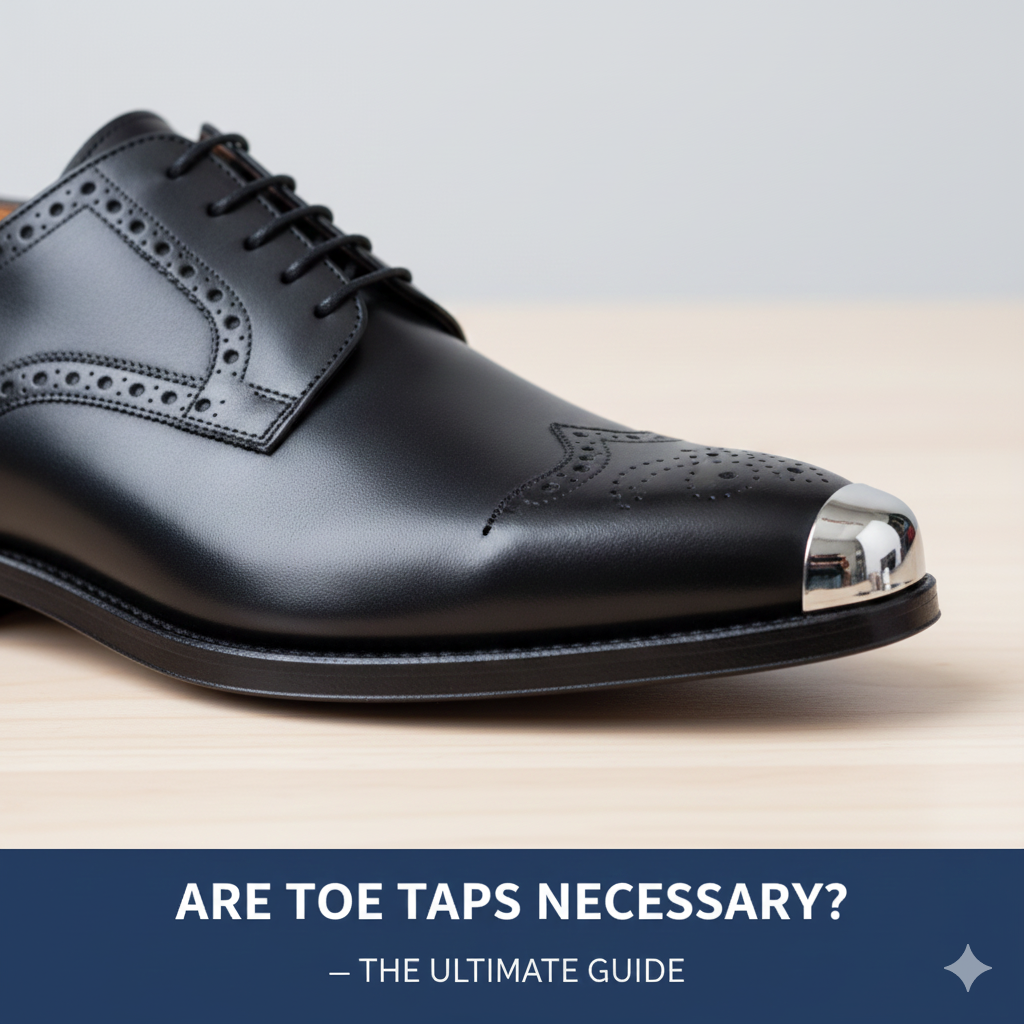
Before we start arguing about whether they’re necessary, let’s clear the basics. A toe tap is a reinforcement piece attached to the tip of the sole, right where most people tend to wear out the leather first. There are different types, and no two behave the same.
Metal Toe Plates
The most famous. Vibram steel, Triumph, Lulu, and custom-made plates are common names. These give that recognizable “click” when you walk on hard surfaces. They’re durable, they protect the sole exceptionally well, and they’re the most polarizing.
Rubber Toe Pieces
Quieter, grippier, and less noticeable. Great for those who don’t like the sound of metal but still want extra protection.
Leather Toe Reinforcements
These aren’t exactly “taps” but rather an additional layer of leather added to the toe during a sole build or repair. More subtle, less intrusive, but also less protective compared to metal.
Different shoemakers have different preferences. Different wearers do too. The type you consider matters just as much as the decision itself.
Why The Toe Wears Out First
People always ask why the toe is the first to go, and honestly, it’s simple biomechanics. Most people walk with a forward lean. That means the toe of the leather sole scrapes the ground before the rest of it. It’s especially noticeable in:
- Fast walkers
- People with long strides
- City commuters on rough pavement
- Folks who drag the toe slightly at lift off
- Anyone who rotates their foot outward as they walk
I’ve seen leather soles that look almost untouched except for a hole forming right at the toe. That’s usually the moment people panic and rush in asking if a cobbler can “save” them. The right time for toe taps is before that panic moment. But that doesn’t automatically mean everyone needs them.
The Case For Toe Taps
There’s a reason people swear by them. And a reason I recommend them often, though not universally.
They Significantly Extend The Life Of Leather Soles
A bare leather sole meets asphalt, concrete, gravel, and uneven surfaces thousands of times a week. That first point of contact is the toe. Without reinforcement, it wears down fast. With metal taps, wear slows dramatically.
If you live or work in a city with rough pavement, you’ll save money in the long run.
They Protect Expensive Soles From Premature Damage
If you’ve paid for welted shoes or premium leather soles, it makes sense to give them the best chance possible. Re-soling is not always cheap. Toe taps buy time.
They Preserve The Shoe’s Profile
Once the toe wears down unevenly, the whole shoe starts to feel off balance. The silhouette changes. Metal taps keep that shape intact and sharp.
They Look Good To Some People
I’ve seen gentlemen smile proudly when their taps hit marble floors and echo through the room. Not everyone loves the aesthetic, but those who do, really do.
They’re Ideal For Frequent Travelers
Airports, train stations, modern city walkways… they all eat leather alive. Taps soften the blow.
The Case Against Toe Taps
Let’s not pretend toe taps are perfect for everyone. They have downsides that matter depending on the person and the pair.
They Change The Sound Of Your Step
Metal taps click. Not softly. On some floors, they clap loudly. Some find it elegant. Others find it embarrassing. I’ve seen people remove taps they loved simply because the sound followed them everywhere.
They Can Make Shoes Slippery
Especially on smooth tile or polished concrete. Rubber taps don’t have this issue, but metal ones absolutely do. If you’re not used to it, the first few steps can be surprising.
Improper Installation Can Ruin A Sole
This is one of the big ones. If the cobbler isn’t experienced, the screws or nails can pierce the sole too deep, weaken the welt, or create internal bumps that hurt your foot. And once the damage is done, fixing it properly is a headache.
They Don’t Suit Every Shoe
Some styles simply look wrong with taps. Lightweight loafers, casual derbies, or chunky rubber-soled boots don’t benefit much from them.
They Can Fall Out
Even well-installed taps will eventually loosen. It’s rare with quality work, but it happens, especially on uneven walking surfaces.
They’re Not Always Necessary In Rural Or Indoor Environments
If you walk mostly on carpet, grass, indoor tiles, or wooden floors, leather soles last much longer naturally.
Real Workshop Scenario: The Man Who Wore Shoes To Dust
I’ll never forget one gentleman who came to me with a pair of beautifully made Oxfords. Full-grain calf. Closed channel sole. Clean stitching. But the toe? Worn down to air. He had walked through London bridges, pavements, and underground tunnels daily. He told me he “didn’t believe in toe taps.” By the time he came in, the welt had been chewed halfway through. That meant he needed:
- A full sole replacement
- A toe rebuild
- Welt reconstruction
The bill wasn’t small.
He put taps on his next pair the day he bought them.
So… Are Toe Taps Necessary?
Let’s break it down by lifestyle, because that’s what really decides this question.
You Probably Need Toe Taps If:
- You live in a major city
- You walk a lot outdoors
- You wear leather soles frequently
- You own expensive shoes you want to preserve
- You walk fast or drag your toes slightly
- You prefer long intervals between resoles
- You want your shoes to keep their shape longer
You Probably Don’t Need Toe Taps If:
- You rarely walk on pavement
- You switch between many pairs often
- Your shoes have rubber soles
- You don’t care about patina or long-term aging
- You dislike the sound or feel of metal
- Your stride is gentle and the toe doesn’t wear fast
Metal vs Rubber: Choosing The Right Tap
Not all taps behave the same. Your choice affects comfort, sound, grip, and durability.
Metal Toe Plates
Best for: heavy wearers, city walkers, luxury shoes.
Pros:
- Highest durability
- Best protection
- Clean, sharp look
Cons:
- Noise
- Reduced grip
- Harder on polished floors
Rubber Toe Taps
Best for: casual wearers, grip-focused users, subtle reinforcement.
Pros:
- Quiet
- Grippy
- Natural underfoot feel
Cons:
- Less durable than metal
- Can peel if poorly applied
Leather Toe Extensions
Best for: traditionalists, vintage shoe lovers.
Pros:
- Completely discreet
- Matches the original sole
- Doesn’t change the walking sound
Cons:
- Minimal protection
- Wears down almost as fast as the original sole
How Toe Taps Are Installed
If you’re curious what happens behind the scenes, here’s the basic process in a workshop:
- The toe area is sanded and leveled
- The tap is positioned precisely to match the curve
- Holes for screws or nails are pre-marked
- The tap is affixed with screws, nails, or a combination
- The sole edge is polished back to a clean profile
A good cobbler can install a set in under half an hour. A bad one can ruin your soles in five minutes.
Toe Taps And Goodyear Welted Shoes
If you’ve invested in welted shoes, toe taps can feel like an insurance policy. Welted soles are designed to be resoled many times, but the toe area wears out faster than the rest. Once it digs into the welt stitching, your resole becomes more complicated and more expensive.
So for welted pairs, toe taps are less about aesthetics and more about protecting the investment.
Toe Taps On Rubber Soles
Generally unnecessary. Rubber doesn’t wear the same way as leather. It’s already resistant, flexible, and designed to take abuse. Unless you’re working with a very thin rubber sole on a high end dress shoe, taps don’t add much.
How Long Toe Taps Last
It depends entirely on how you walk and where you walk. I’ve seen metal taps last:
- Up to two years on gentle walkers
- Six months on city commuters
- Three months on heavy toe draggers
Rubber taps last about half as long. Leather reinforcements last a fraction of that.
Do Toe Taps Affect Resole Costs?
Yes. In a good way.
Toe taps slow wear, meaning you can go longer between resoles. But when you do resole, the taps have to be removed and replaced. Most cobblers include this in the process without issue.
Personal Recommendation From Years Of Experience
If the shoes are expensive, the soles are leather, and you plan to wear them often on pavement, get toe taps from day one. Don’t wait for the toe to hollow out. That’s the mistake many people make. A hollow toe means repair is already more complicated.
For occasional wearers or mostly indoor wearers, taps aren’t essential. You can skip them and just monitor the toe every few months.
For people who hate the clicking sound, rubber taps are perfectly valid. Don’t let purists make you feel like it’s metal or nothing. The goal is protection, not tradition for tradition’s sake.
FAQs About Toe Taps
Do toe taps make shoes last longer?
Yes, especially leather-soled shoes in urban environments.
Are metal taps noisy?
Very. Some people love it, some people can’t stand it.
Will taps damage floors?
Only if the floor is extremely soft. Otherwise, no.
Can toe taps be removed later?
Absolutely. But the holes will remain in the sole until your next resole.
Are taps bad for comfort?
Most people don’t feel them at all once they’re worn in.
Do high-end brands recommend them?
Some do. Many leave it as personal preference. But in big cities, cobblers recommend them all the time.
Final Thoughts From Someone Who Has Seen It All
Toe taps aren’t mandatory. They’re not a requirement for every leather sole under the sun. But they’re also not a gimmick. They’re a practical solution to a real problem, and for the right person with the right shoes in the right environment, they can make the difference between a sole that lasts six months and one that lasts two years. The key is knowing your walking habits and your lifestyle. Shoes should fit your life, not the other way around.
If you’re still undecided, take a look at the toe of your current leather soles. Does the wear pattern tell you a story that taps might have prevented, or are you perfectly fine without them?
