
There’s something oddly frustrating about a shoe lace that refuses to stay tied. I’ve seen it a thousand times in the workshop. Someone walks in with great shoes—sometimes expensive ones—but the laces are sloppy, uneven, or constantly coming undone.
After years of working around footwear, repairing shoes, testing sneakers, and helping customers get a better fit, I’ve learned something simple: most people were never really taught how to tie their shoes lace properly.
They learned quickly as kids, stuck with that method forever, and never questioned it again. But if your laces come loose halfway through the day, or one loop sits higher than the other, your knot probably needs a small adjustment.
The good news? Once you understand the proper way how to tie your shoes lace, your shoes stay secure, feel better on your feet, and even wear more evenly.
Let me walk you through it the way I explain it to customers standing right at the cobbler bench.
Quick Answer: How Do You Tie Your Shoes Lace?
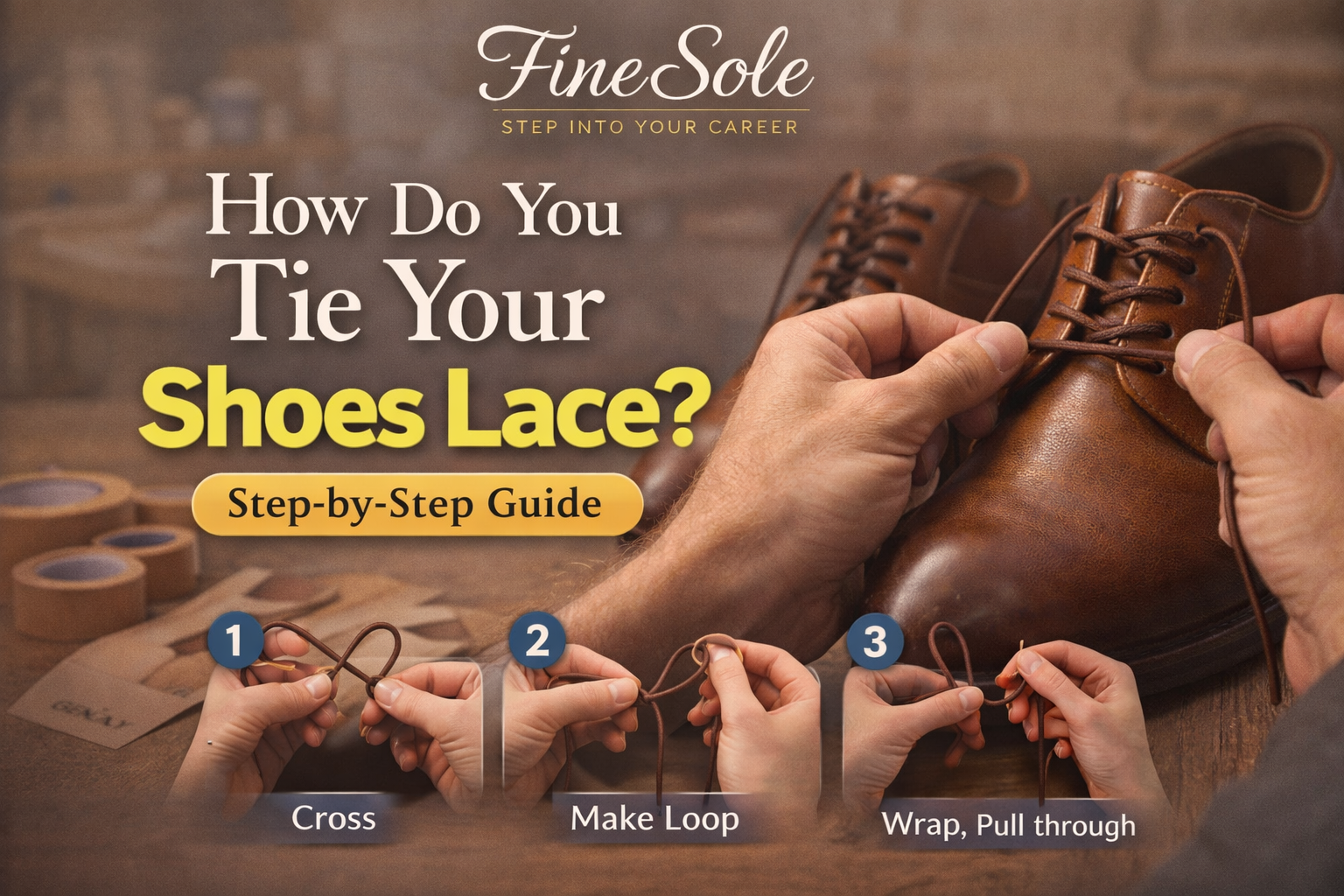
The most reliable way to tie your shoes lace is the standard bow knot.
Basic steps:
- Cross one lace over the other and pull tight
- Make a loop (bunny ear) with one lace
- Wrap the other lace around the loop
- Pull the second lace through the hole created
- Tighten both loops evenly
If done correctly, the loops should sit horizontally across the shoe, not vertical.
That small detail tells you the knot is balanced and secure.
Step-by-Step Guide: How to Tie Your Shoes Lace Properly
Over the years I’ve watched thousands of people lace their shoes. The difference between a loose knot and a secure one usually comes down to tension and symmetry.
Let’s go through the method slowly.
Step 1: Start With Even Lace Lengths
Before tying anything, check your lace balance.
Pull the laces so both sides are roughly the same length.
If one side is shorter than the other, you’ll constantly struggle with the knot.
From a cobbler’s perspective, uneven lace tension can also cause:
- tongue shifting
- uneven pressure on the foot
- faster lace wear
It sounds minor, but it makes a difference.
Step 2: Cross the Laces and Pull Tight
Now cross one lace over the other.
Pull both ends firmly.
You want the laces snug across the eyelets, but not cutting into the shoe.
Good tension here keeps your shoe secure during walking or running.
This first knot is the foundation of everything.
Step 3: Make the First Loop
Take one lace and fold it into a loop.
Most people call this the bunny ear.
Hold the base of the loop firmly with your thumb and index finger.
Keep the loop about two inches long.
Too large and the knot will loosen quickly.
Step 4: Wrap the Second Lace Around the Loop
Now take the other lace.
Wrap it around the base of the loop once.
Don’t rush this part. A clean wrap makes the final knot stronger.
You’ll notice a small opening forming behind the loop.
That’s where the magic happens.
Step 5: Push the Lace Through the Hole
Push the second lace through the opening you created.
This forms the second loop.
Grab both loops and pull outward evenly.
Your knot should tighten smoothly.
Step 6: Check the Direction of the Loops
Here’s the cobbler trick most people don’t know.
Look at the loops.
They should sit sideways across the shoe.
If they point up and down, your knot is unbalanced and likely to loosen.
To fix it, simply repeat the knot and flip the first cross direction.
Small adjustment. Big difference.
Why Proper Shoe Lace Tying Actually Matters
Some people think tying laces is just a small habit.
From a footwear professional’s perspective, it affects more than you’d expect.
A well-tied lace can:
- improve shoe stability
- reduce heel slipping
- prevent tongue shifting
- extend lace lifespan
- improve walking comfort
I’ve seen runners blame their shoes when the real problem was loose lacing.
Different Ways to Tie Your Shoe Laces
The standard bow knot works for most situations, but certain shoes benefit from different techniques.
Let’s look at a few.
The Runner’s Knot (Heel Lock)
This method works well for running shoes.
It prevents heel slippage.
Steps include:
- Lace normally until the top eyelets
- Feed each lace straight up into the last eyelet
- Cross the laces through the loops
- Pull tight before tying the bow
Runners swear by this trick.
Double Knot for Long Walks
If you’re walking all day, add a simple extra step.
After tying the bow:
Tie the loops together once more.
This double knot prevents loosening during long activities.
Just remember it can be harder to untie.
Surgeon’s Knot
Some hikers prefer this method.
It adds friction to the knot.
Steps:
- Wrap the lace twice during the first cross
- Continue with a normal bow
The extra wrap locks tension in place.
Great for boots.
Expert Tips From a Cobbler’s Bench
After decades around footwear, I’ve picked up small tricks that most people never hear about.
These details help your shoes perform better.
Replace Worn Laces Early
If your laces feel rough, fuzzy, or stiff, replace them.
Old laces lose grip.
They slide loose easily.
Fresh laces make knots hold better.
Match Lace Type to Shoe Style
Different shoes need different lace materials.
For example:
Flat cotton laces work best for:
- sneakers
- casual shoes
- skate shoes
Round waxed laces work better for:
- dress shoes
- leather boots
Wax coating increases friction, so the knot stays tighter.
Don’t Over-Tighten the Top Eyelets
A common mistake I see every week.
People crank the top lace too tight.
This can cause:
- foot numbness
- tongue pressure
- lace breakage
The shoe should feel secure, not restrictive.
Common Mistakes When Tying Shoe Laces
Even simple tasks can go wrong.
Here are the most frequent problems I see.
The “Granny Knot”
This knot looks normal but sits crooked.
It loosens quickly.
The loops point vertically instead of sideways.
Fix it by reversing the direction of your first cross.
Uneven Lace Pull
If you tighten one side more than the other, pressure builds unevenly.
This can cause discomfort across the top of your foot.
Always tighten gradually from the bottom eyelets upward.
Loops That Are Too Long
Large loops catch on things.
They also loosen faster.
Shorter loops are stronger and cleaner.
When to Replace Your Shoe Laces
Most people wait until a lace snaps.
That’s too late.
Replace laces when you notice:
- fraying fibers
- stiff texture
- fading wax coating
- uneven stretching
New laces cost very little but make your shoes feel brand new again.
FAQs About How to Tie Your Shoes Lace
Why do my shoe laces keep coming undone?
This usually happens because of an unbalanced knot, often called the granny knot. Reversing the direction of the first cross often fixes the issue.
What is the strongest way to tie shoe laces?
The runner’s knot or surgeon’s knot provides extra friction and stability, making them ideal for sports and hiking shoes.
Should shoe laces be tight or loose?
Laces should be snug enough to hold your foot securely but not tight enough to cause pressure or numbness.
Why do some shoe knots sit crooked?
A crooked knot means the lace crossover direction was incorrect. When tied correctly, loops should sit horizontally across the shoe.
Are flat or round laces better?
Flat laces generally stay tied better because they create more friction. Round waxed laces work well for dress shoes and boots.
Finally
After spending years around footwear—repairing shoes, testing sneakers, and watching people struggle with simple things like laces—I’ve realized something interesting.
The smallest details often make the biggest difference.
Learning how to tie your shoes lace properly might seem basic, but it improves comfort, stability, and even the lifespan of your shoes.
Once you start paying attention to lace tension, knot direction, and lace quality, your shoes simply behave better.
And honestly? A clean, balanced knot just looks better too.
Next time you lace up your shoes, take an extra five seconds to do it right. Your feet will thank you.
