
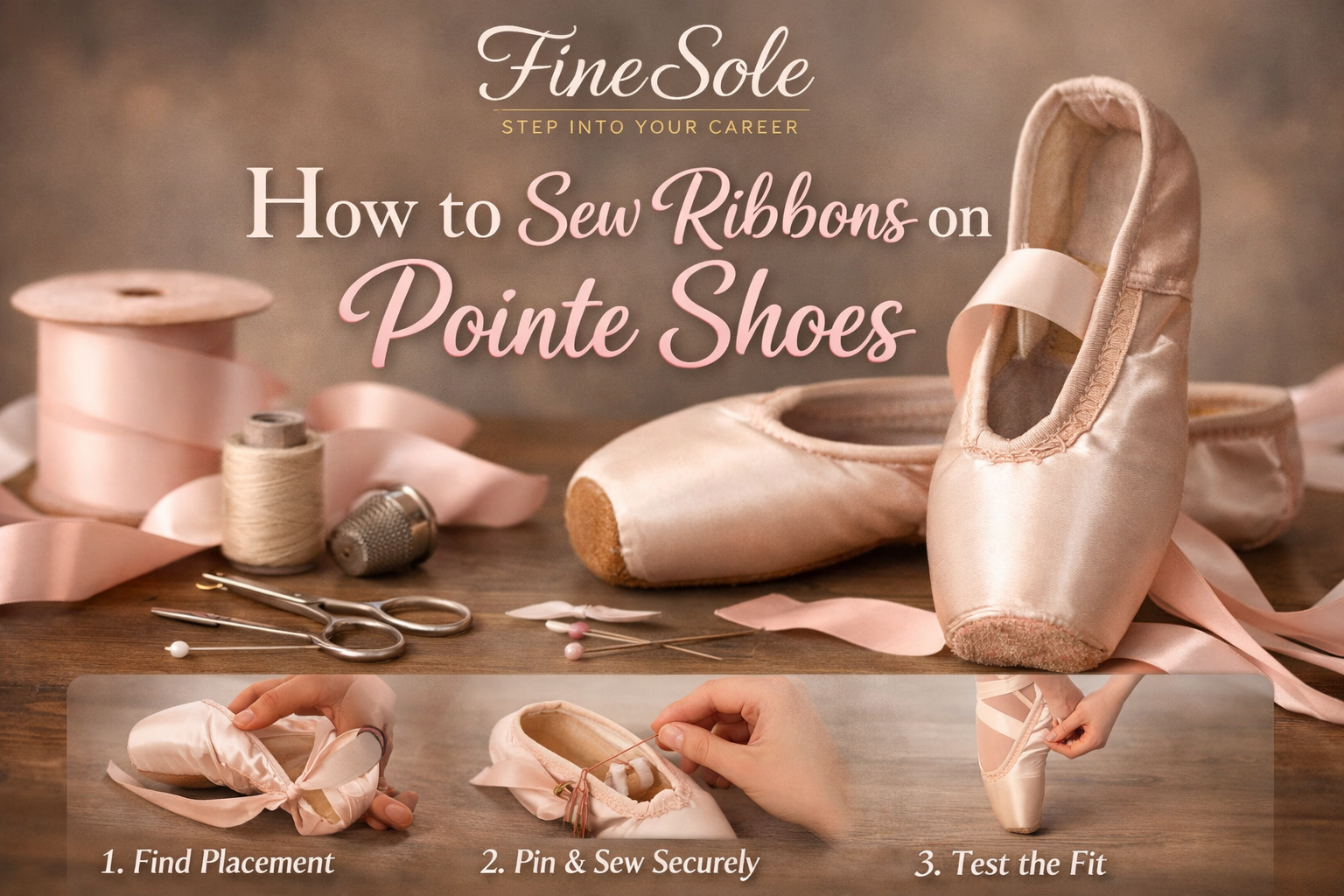
The first time you open a fresh pair of pointe shoes, it feels exciting… and a little intimidating. You have the shoes, the ribbons, the elastic, maybe even the needle and thread. Then reality hits. You actually have to attach everything yourself. If you have been wondering how to sew ribbons on pointe shoes, you are in the right place.
Over the years, I have helped dancers prep their footwear and repair delicate ballet shoes that were not stitched correctly the first time. I can tell you this with confidence. Sewing pointe ribbons is not difficult, but placement and technique matter more than most beginners realize. Done right, the ribbons support your ankle, improve fit, and help your shoes last longer. Done wrong, they twist, dig into your skin, or loosen mid-rehearsal.
In this beginner-friendly guide, I will walk you step by step through how to sew ribbons on pointe shoes, including the tools you need, exact placement tips, and common mistakes to avoid so your shoes feel secure and comfortable from the very first wear.
Read Also: How Do I Know If Compression Socks Are Working? Signs & Tips
Quick Answer: How to Sew Ribbons on Pointe Shoes
To sew ribbons on pointe shoes:
- Fold the heel forward to find the correct placement
- Pin ribbons at the side seams
- Use strong thread and small stitches
- Sew through the lining only, not the outer satin
- Knot securely and trim excess thread
Proper placement ensures ankle support and prevents ribbon twisting.
Tools You Will Need
Before you start, gather everything in one place. Trust me, stopping midway to hunt for thread is frustrating.
Basic sewing kit
- Pointe shoe ribbons
- Strong matching thread
- Sharp hand sewing needle
- Straight pins
- Small scissors
- Optional thimble
Pro tip
Use heavy-duty thread rather than thin sewing thread. Pointe ribbons take tension during turns and jumps, so durability matters.
Step 1: Find the Correct Ribbon Placement
This is where most beginners either get it right or create future headaches. Placement affects comfort, support, and how your foot feels en pointe.
The fold method (most reliable)
- Hold the pointe shoe upright
- Gently fold the heel forward toward the insole
- Notice where the side seams naturally form a crease
- Mark this spot on both sides
That crease is usually the ideal ribbon placement point.
From experience, this method works better than guessing or measuring randomly.
Step 2: Prepare and Cut Your Ribbons
Most dancers use one long ribbon per shoe that gets cut into two equal pieces.
Standard approach
- Cut ribbon into four equal pieces total
- Each piece is usually about 18 to 22 inches
- Heat seal or lightly melt ribbon ends to prevent fraying
Quick comfort check
Before sewing, wrap a ribbon loosely around your ankle to confirm the length feels right. It is easier to adjust now than later.
Step 3: Pin the Ribbons in Position
Pinning is your safety net. Skip this step and the ribbon may shift while sewing.
How to pin correctly
- Place ribbon inside the shoe
- Align the edge with your crease mark
- Angle the ribbon slightly toward the heel
- Insert two pins to hold it steady
Why the angle matters
A slight backward angle helps the ribbon wrap smoothly around the ankle instead of bunching at the front.
Step 4: Thread Your Needle Properly
Use a double thread for strength. Pointe work puts real tension on these stitches.
Threading tips
- Cut about 18 inches of thread
- Double it over
- Knot the end securely
- Use a sharp needle to protect the satin
If your needle struggles to pass through the lining, switch to a slightly stronger one.
Step 5: Sew the Ribbon Securely (The Right Way)
Now we get into the real work.
Important rule
Only sew through the lining and canvas.
Do not sew through the outer satin.
Piercing the satin can:
- Weaken the shoe
- Create visible marks
- Reduce durability
Step-by-step stitching
- Start from inside the shoe
- Use small, tight whip stitches
- Sew along three sides of the ribbon base
- Keep stitches close together
- Avoid stitching the drawstring casing
Take your time here. Neat stitching equals a stronger hold.
Read Also: How to Keep Socks From Falling Down
Step 6: Knot and Reinforce
Once the ribbon is fully stitched:
- Tie a secure double knot
- Push the knot inside the lining
- Trim excess thread
- Lightly tug the ribbon to test strength
If it feels loose, add a few more stitches now rather than fixing it later.
Step 7: Repeat for All Ribbons
Each pointe shoe needs two ribbons. Work methodically and keep placement consistent on both shoes.
Consistency checklist
- Same height on both sides
- Same ribbon angle
- Same stitch density
- Same ribbon length
Symmetry helps your shoes feel balanced when dancing.
How to Test Your Ribbons Before Dancing
Before heading to class, always do a quick wear test.
Wrap and check
- Tie ribbons around your ankle
- Stand and rise to demi pointe
- Move your ankle gently
- Check for twisting or pulling
Your ribbons should feel supportive but not restrictive.
Common Beginner Mistakes to Avoid
I have seen this many times in the workshop. Avoid them and you will save yourself frustration.
Sewing through the satin
This weakens the shoe and looks messy. Always stay inside the lining.
Placing ribbons too far forward
This causes ankle discomfort and poor support. Use the fold method instead of guessing.
Using a weak thread
Thin thread can snap during rehearsals. Always double thread and use strong material.
Making stitches too large
Big stitches loosen faster. Small, tight stitches hold much better over time.
Skipping the angle
Straight ribbons often twist. That slight backward angle makes a noticeable difference.
Extra Tips From Years Around Dance Footwear
If you want your pointe setup to feel truly professional, keep these in mind.
- Replace ribbons when they soften or fray
- Keep spare thread in your dance bag
- Check stitching every few weeks
- Store shoes in a breathable bag
- Avoid pulling ribbons too tight when tying
Little habits like these extend the life of delicate ballet shoes.
Frequently Asked Questions
Where exactly should ribbons go on pointe shoes?
Most dancers place ribbons at the natural crease formed when the heel is folded forward. This usually aligns with the side seam and provides the best ankle support.
Can beginners sew pointe ribbons themselves?
Yes. With basic tools and careful stitching, beginners can successfully sew ribbons. Taking time with placement and using strong thread makes the biggest difference.
How tight should pointe ribbons be?
Ribbons should feel snug and supportive but never restrict circulation. You should be able to move your ankle comfortably while still feeling secure.
Do you sew through the satin of pointe shoes?
No. Always sew through the lining and canvas only. Stitching through the satin can damage the shoe and reduce durability.
How long should pointe shoe ribbons be?
Most ribbons are cut to about 18 to 22 inches per piece, but dancers should adjust based on ankle size and personal comfort.
Final Thoughts From the Workbench
Learning how to sew ribbons on pointe shoes is one of those small skills that makes a big difference in how your shoes perform. Take your time with placement. Use a strong thread. Keep your stitches neat and secure. When done properly, your ribbons should feel like a natural extension of the shoe, quietly supporting every movement.
If your pointe shoes ever feel unstable or uncomfortable, do not immediately blame the shoe. Sometimes the fix is simply better ribbon placement and cleaner stitching.
The next time you prepare a fresh pair, will your ribbons be just attached… or professionally secured for real performance comfort?
