
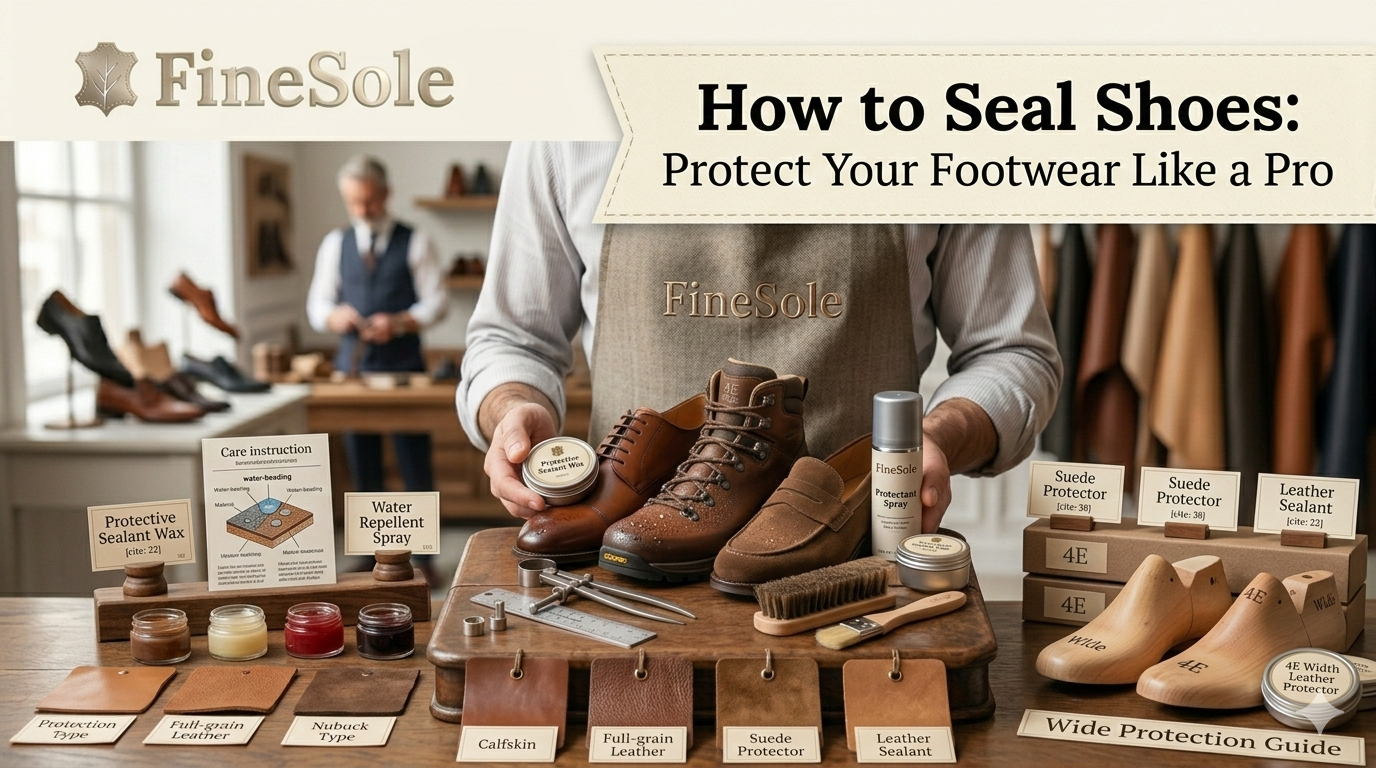
If you have ever watched a good pair of shoes slowly lose their shine after a few rainy walks, you already know the frustration. One day, they look sharp and confident, the next day, water spots and stains start creeping in. I have seen it countless times at the workbench. Most people invest in quality footwear but skip one simple step that could double the life of their shoes. Learning how to seal shoes properly changes everything.
Over the years of repairing boots, dress shoes, sneakers, and work footwear, one pattern keeps repeating. Shoes that are sealed and protected early almost always age better. The leather stays supple. The fabric resists stains. The soles hold up longer.
Meanwhile, unprotected pairs often come in looking tired far too soon. The difference is rarely luck. It is preparation.
In this hands-on guide, I will walk you through exactly how to seal shoes: protect your footwear like a professional, using methods that actually work in real life. Whether you wear leather dress shoes to the office in the United States, suede boots in Canada, or everyday sneakers for travel, the steps below will help you protect your investment the right way.
Quick Answer: How to Seal Shoes Properly
If you need the fast version, here is the professional process I use in the shop.
Step-by-step overview
- Clean the shoes thoroughly
- Let them dry completely
- Choose the right sealant for the material
- Apply in thin, even layers
- Allow proper curing time
- Test water resistance
Done correctly, sealing improves durability, stain resistance, and overall appearance without hurting comfort or breathability.
Why Sealing Shoes Matters More Than Most People Think
Many people assume sealing is only for hikers or people who live in snowy regions. That is not true. Every day wear slowly exposes shoes to moisture, dirt, sidewalk salt, spilled drinks, and unexpected weather. Over time, these small exposures add up.
When shoes are not sealed, moisture can penetrate the upper material. Leather begins to dry and crack. Suede loses its soft texture. Fabric sneakers start absorbing odors and stains more easily. I often tell customers this simple truth. Prevention is always cheaper than repair.
Proper sealing helps with:
- Water resistance
- Stain protection
- Longer leather life
- Easier maintenance
- Better long term appearance
If you care about comfort, durability, and getting full value from your footwear, sealing should be part of your routine.
Know Your Shoe Material Before You Seal
Before you rush to spray anything, pause for a moment. One mistake I see too often is using the wrong product on the wrong material. Different shoes require different protection methods.
Leather Shoes
Full-grain and top-grain leather respond very well to wax-based or cream sealants. These help maintain leather quality while adding a protective barrier. When done right, the leather stays flexible and develops a rich patina instead of cracking.
Suede and Nubuck
These materials need spray protectors designed specifically for delicate surfaces. Heavy wax products will flatten the nap and ruin the texture. Always use a breathable suede protector.
Fabric and Mesh Sneakers
Athletic shoes usually benefit from lightweight water repellent sprays. The goal here is protection without blocking airflow, since breathability affects comfort during long wear.
Synthetic and Faux Leather
These materials are more forgiving but still benefit from protective sprays. Just avoid heavy oils that can leave residue.
Knowing your material is the first professional step in learning how to seal shoes correctly.
Step by Step: How to Seal Shoes Like a Professional
Let me walk you through the exact process I use when prepping customer footwear. Take your time with each step. Rushing is where most mistakes happen.
Step 1: Clean the Shoes Thoroughly
Sealing dirty shoes locks in grime. That is the opposite of what you want.
Start by removing:
- Surface dust
- Mud
- Old polish buildup
- Salt stains
For leather, use a damp cloth or gentle leather cleaner. For suede or nubuck, use a proper suede brush. For sneakers, mild soap and water usually work well.
Pro tip from the bench:
Always clean the welt area and stitching carefully. Dirt loves to hide there and can weaken durability over time.
Step 2: Let the Shoes Dry Completely
This step is boring but critical. Never apply sealant to damp footwear. Moisture trapped underneath can lead to odor, material breakdown, or uneven protection.
Place the shoes in a well ventilated room at normal indoor temperature. Avoid direct heat like radiators or hair dryers. Excess heat can stiffen leather and affect fit.
Most shoes need:
- 6 to 12 hours air drying
- Longer if heavily soaked
If the shoes feel cool to the touch, give them more time.
Step 3: Choose the Right Sealant
This is where quality matters. A cheap product can leave white residue or stiffen the upper. I have seen both more times than I can count.
General guide
- Leather dress shoes: wax or cream protector
- Suede and nubuck: waterproof spray
- Sneakers and fabric: breathable, water repellent
- Work boots: heavy-duty waterproofing wax
Look for products that mention:
- Flexibility
- Breathability
- Material compatibility
These three factors protect comfort and long-term wear.
Step 4: Apply Thin Even Layers
When learning how to seal shoes, remember this rule from every experienced cobbler. Thin layers beat thick coats every time.
Hold sprays about 6 to 8 inches away. Move your hand steadily across the surface. For creams or waxes, use a soft cloth and work in small circular motions.
Avoid these common errors
- Over-soaking the shoe
- Missing seams and toe area
- Applying indoors without ventilation
- Rushing the coverage
Aim for full but light coverage. The shoe should look slightly damp, not drenched.
Step 5: Allow Proper Curing Time
This is where patience pays off. Many people ruin the process by wearing the shoes too soon.
Most sealants need:
- 12 to 24 hours curing time
- Dry, room temperature environment
- Good airflow
During this period, the protective barrier forms and bonds with the material. Wearing the shoes early can weaken the protection.
Step 6: Test Water Resistance
After curing, do a simple water test. Sprinkle a few drops on the surface.
If sealed correctly:
- Water beads up
- Drops roll off
- Material stays dry underneath
If water absorbs quickly, apply a second light coat and repeat the curing process.
Expert Tips From Years at the Cobbler Bench
Over time, you pick up small habits that make a big difference. These are the ones I always share with serious shoe owners.
Rotate your shoes
Even sealed footwear needs rest. Rotating pairs improves durability and comfort.
Condition the leather before sealing
Dry leather should be nourished first. Sealing brittle leather can trap dryness inside.
Reapply protection seasonally
Most shoes need resealing every few months, depending on wear and climate.
Store shoes properly
Use shoe trees for leather footwear. Proper storage helps maintain fit and shape after sealing.
Common Mistakes That Shorten Shoe Lifespan
I have repaired enough footwear to know where things usually go wrong. Avoid these and your shoes will thank you.
- Applying sealant to dirty shoes
- Using the wrong product for the material
- Skipping drying time
- Over-applying thick coats
- Ignoring high wear areas like toe and heel
Small details separate average results from professional-level protection.
When Sealing Is Not Enough
Let us be honest for a moment. Sealing is powerful, but it is not magic. Some shoes come in already too far gone.
Sealing may not fully help if:
- Leather is already deeply cracked
- Soles are separating
- Fabric is heavily torn
- The waterproof lining is damaged
In those cases, repair or replacement may offer better value. A good rule I use in the shop is simple. If structural damage is present, fix that first before worrying about sealing.
List 10 products to use to seal your shoe like a pro
Here’s a list of 10 high-quality products to seal your shoes like a pro, covering leather, suede, nubuck, canvas, and synthetic footwear. These are trusted by cobblers, sneaker enthusiasts, and professional shoe care specialists:
1. Kiwi Protect & Shine Waterproofing Spray
- Best for: Leather & synthetic shoes
- Features: Provides water resistance and maintains shine, quick-drying formula
- Why pro tip: Easy for quick home sealing, affordable, widely available in the USA and Canada
2. Crep Protect Spray
- Best for: Sneakers, canvas, suede
- Features: Nano-technology water and stain repellent
- Why pro tip: Works well on fashion sneakers and everyday casual shoes, invisible coating
3. Collonil Carbon Pro Waterproofing Spray
- Best for: Leather, nubuck, suede, textile
- Features: Professional-grade, highly effective in rain or snow
- Why pro tip: Trusted by cobblers in Europe for premium shoes
4. Nikwax Fabric & Leather Proof
- Best for: Leather and textile boots
- Features: Water-based, maintains flexibility, breathable
- Why pro tip: Great for hiking boots or outdoor footwear, eco-friendly formula
5. Sofolk Leather Wax
- Best for: Leather shoes and boots
- Features: Protective wax that adds a water-resistant layer and nourishes leather
- Why pro tip: Adds subtle shine while protecting the leather without stiffness
6. Jason Markk Repel Spray
- Best for: Sneakers (suede, nubuck, leather, and mesh)
- Features: Lightweight, durable protection against water and stains
- Why pro tip: Popular among sneakerheads, won’t discolor your shoes
7. Angelus Water & Stain Repellent
- Best for: Leather, suede, nubuck, canvas
- Features: Professional spray, fast-drying, long-lasting
- Why pro tip: Widely used by cobblers for premium shoe care
8. Tarrago Nubuck & Suede Protector
- Best for: Suede and nubuck shoes
- Features: Breathable protection, preserves texture and color
- Why pro tip: Avoids flattening delicate nap like generic sprays do
9. Kiwi Boot Protector Wax
- Best for: Heavy-duty leather boots and work shoes
- Features: Water-resistant wax, protects against salt, mud, and light scratches
- Why pro tip: Excellent for winter wear and outdoor conditions
10. Sofolk Textile Protector Spray
- Best for: Canvas or mesh sneakers
- Features: Breathable, invisible coating that repels water and stains
- Why pro tip: Perfect for everyday casual shoes and lightweight sneakers
Frequently Asked Questions
How often should I seal my shoes?
Most everyday shoes benefit from sealing every three to six months. Heavy use footwear like work boots may need more frequent treatment. Pay attention to water no longer beading on the surface. That is usually your signal to reseal.
Can I seal brand new shoes?
Yes, and I actually recommend it. Sealing new shoes early provides the best protection because the material is still fresh and clean. It is one of the easiest ways to improve durability right from day one.
Will sealing shoes affect breathability?
Quality sealants should not block airflow when applied correctly. Thin, even layers maintain comfort while adding protection. Over applying heavy products is what usually causes stiffness or reduced breathability.
Is waterproof spray enough for leather shoes?
Waterproof spray helps, but leather often benefits more from cream or wax based protection. These products nourish the leather while creating a protective barrier. Think of it as both maintenance and defense in one step.
Can I use the same sealant for all my shoes?
It is better to match the product to the material. Leather, suede, and mesh all behave differently. Using the correct formula helps maintain fit, comfort, and long term appearance.
Final Thoughts From the Workbench
Learning how to seal shoes: protect your footwear like a professional is one of those small habits that pays off for years. I have seen modest shoes outlast expensive pairs simply because they were cared for properly. Protection is not about making shoes look shiny for one day. It is about preserving comfort, durability, and style through real world wear.
Take your time. Use the right product. Apply thin layers. Let the shoes rest and cure properly. Do those things consistently and your footwear will age far more gracefully than most pairs walking down the street today.
Your shoes carry you through workdays, travel, weather, and long hours on your feet. The real question is simple. Are you giving them the protection they quietly deserve?
