
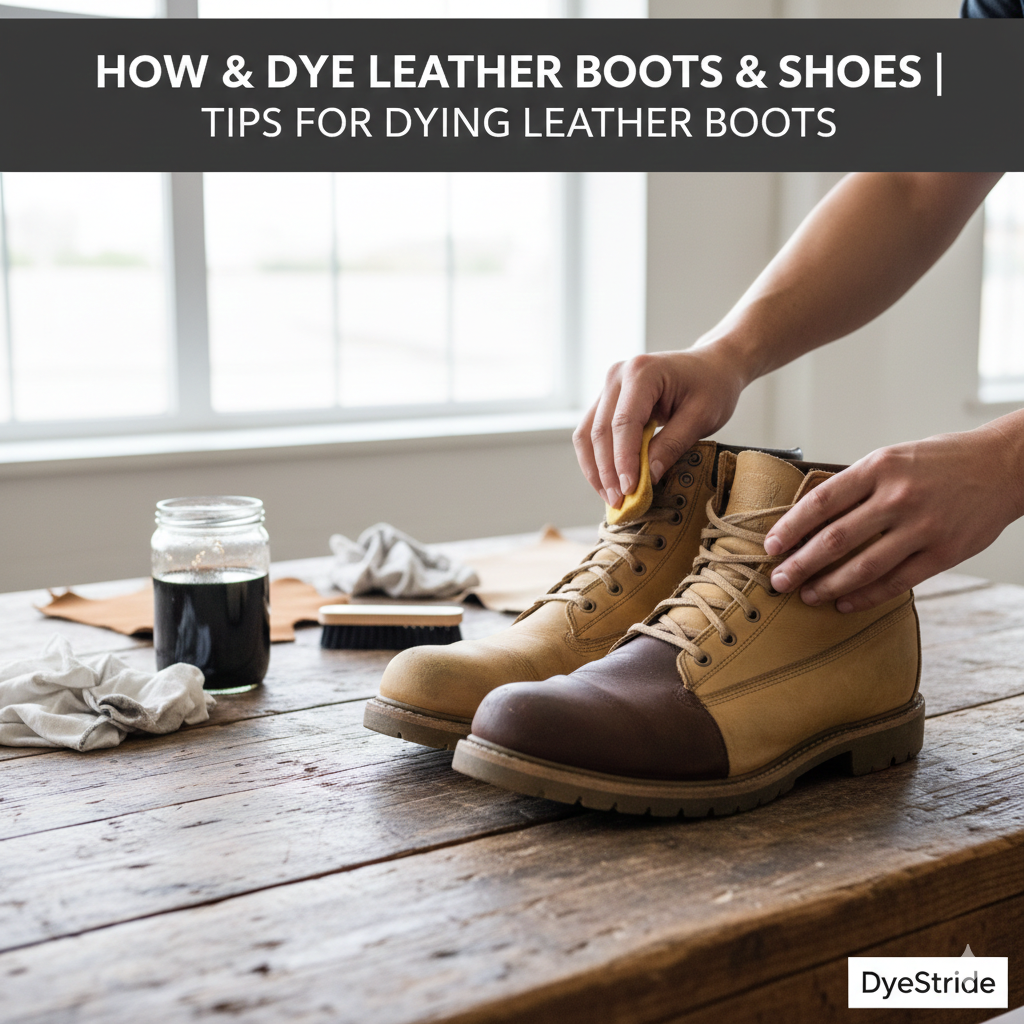
Leather boots have a way of sticking with you. Not just on your feet, but in your memories too. A good pair carries scuffs from long walks, creases from daily wear, and stories from places you barely remember. But what happens when the color fades, stains refuse to leave, or your once rich brown boots now look tired and uneven? That’s usually when people think it’s time to toss them. I’ve been there. As someone who has worn, repaired, and revived leather footwear for years, I can tell you this: most leather boots don’t need replacing. They need the right leather boot dye and a little patience.
The idea of dyeing leather boots sounds intimidating at first. Will the color turn out patchy? Will the leather stiffen? Can you really dye boots at home and still get a clean, professional look? These are the exact questions I hear from people standing in my workshop, holding a pair of boots they love but no longer enjoy wearing. The truth is, learning how to dye leather boots and shoes is less about talent and more about understanding leather, preparation, and restraint. Rushing the process is what ruins results.
Leather boot dye is not just about changing color. Sometimes it’s about restoring depth, hiding wear, or giving new life to boots that fit perfectly but look worn out. I’ve dyed work boots that went back to job sites looking brand new, and dress shoes that found their way back into rotation after years in the closet. If you’ve ever wished your boots were darker, richer, or simply more even, this guide will walk you through the process the same way I would explain it to a friend across a workbench.
Read more: 7 Best Tactical Boots: A Field-Tested Guide
What Is Leather Boot Dye and When Should You Use It?
Leather boot dye is a penetrating color solution designed to soak into leather fibers rather than sit on top like paint. This is important because leather needs to breathe, flex, and age naturally. When dye is used correctly, it enhances the leather’s character instead of covering it up. I always tell people that dye works with leather, not against it.
You should consider dyeing leather boots when the original color has faded unevenly, when deep stains won’t lift with cleaning, or when you want to go darker for a fresh look. Dye is also useful after heavy conditioning or repairs that leave color differences across the surface. It’s less ideal for going from dark to light, which almost never works cleanly.
A quick reality check before you start:
- Dye works best on smooth full-grain or top-grain leather
- You can always go darker, but going lighter is risky
- Patina and creases will still show, and that’s a good thing
Understanding this upfront saves disappointment later.
Types of Leather Boot Dye and How to Choose the Right One
Not all leather dyes are created equal. Choosing the wrong type is one of the fastest ways to ruin a good pair of boots. Over the years, I’ve tested plenty, and each has its place depending on the leather and the result you want.
Read more: 10 Ways to Stop Sweaty and Smelly Feet From Wearing Shoes
Alcohol Based Leather Dye
This is the most common and most powerful option. Alcohol based leather boot dye penetrates deeply and dries fast. It’s great for color changes and restorations but can dry out leather if you skip conditioning afterward. I use this when I need strong, even color.
Oil Based Leather Dye
Oil based dyes soak in more slowly and tend to produce a richer, more natural finish. They’re forgiving and great for boots that already have some age and softness. These are my go to for heritage boots and casual leather shoes.
Water Based Leather Dye
Water based dyes are easier for beginners and less harsh, but they don’t penetrate as deeply. They work best for light touch ups or subtle color refreshes rather than full transformations.
If you’re unsure, start with oil-based dye. It’s more forgiving and easier to control.
Tools and Supplies You’ll Need Before You Start
Preparation matters more than the dye itself. I’ve seen beautiful leather ruined because someone tried to cut corners here. Lay everything out before you begin so you’re not scrambling mid-process.
Here’s what I keep on the bench:
- Leather boot dye in your chosen color
- Leather cleaner or saddle soap
- Soft cloths or lint free rags
- Wool dauber or sponge applicator
- Gloves to protect your hands
- Leather conditioner or cream
- Old newspapers or drop cloth
Having the right tools makes the process calmer and more controlled.
How to Prepare Leather Boots Before Dyeing
This step is where most people rush, and it always shows in the final result. Leather holds oils, dirt, and old polish deep in its pores. If you don’t remove them, the dye won’t absorb evenly.
Start by cleaning the boots thoroughly. Use a damp cloth to remove surface dirt, then apply leather cleaner or saddle soap with gentle circular motions. Pay attention to creases and stitching where buildup hides. Let the boots dry naturally, away from heat.
Once dry, lightly wipe the leather with a clean cloth. The surface should feel dry and slightly matte, not slick. That’s how you know the leather is ready to accept dye.
Step by Step: How to Dye Leather Boots & Shoes at Home
This is the heart of the process. Take your time here. Leather rewards patience.
Step 1: Test the Dye First
Always test the leather boot dye on a small hidden area. Inside the tongue or near the heel works well. Leather reacts differently depending on finish and age.
Step 2: Apply Dye in Thin Layers
Dip your applicator lightly into the dye. Less is more. Apply using small circular motions, working section by section. The first coat will look uneven. That’s normal.
Step 3: Let Each Coat Dry
Give each layer time to dry fully before adding another. Rushing causes streaks and blotches. I usually wait at least 30 minutes between coats.
Step 4: Build Color Gradually
Continue adding thin layers until you reach the depth you want. Most boots need two to four coats.
Step 5: Buff and Condition
Once fully dry, buff the boots with a soft cloth. Then apply leather conditioner to restore oils and flexibility.
This slow build approach is what gives dyed boots that rich, even finish.
Common Mistakes That Ruin Dyed Leather Boots
I’ve seen all of these mistakes, and most are easy to avoid if you know what to watch for.
One big mistake is overloading the applicator. Too much dye at once causes pooling and dark patches. Another is skipping conditioning afterward, which leaves leather stiff and prone to cracking.
Avoid dyeing in humid conditions. Moisture interferes with absorption and drying. Also, never use heat to speed things up. Heat dries leather unevenly and can cause long term damage.
How to Maintain Dyed Leather Boots Afterward
Freshly dyed leather needs care to keep its color and flexibility. The first week is especially important.
Condition lightly after the dye has fully set. Use neutral leather cream rather than heavy polish at first. Store boots in a cool, dry place away from direct sunlight, which can fade color over time.
Regular maintenance tips:
- Clean gently instead of scrubbing hard
- Condition every few weeks, depending on wear
- Rotate boots to let the leather rest
Treated well, dyed boots often age better than factory colored ones.
Can You Dye Different Types of Leather Boots?
Not all leather behaves the same. Smooth leather takes dye best, while heavily coated or patent leather resists absorption. Suede and nubuck require specialized dyes and techniques, and the texture will change slightly.
If the leather feels plasticky or overly shiny, dye may not penetrate well. In those cases, light color restoration is safer than full dyeing.
FAQ: Leather Boot Dye and Dyeing Leather Shoes
Can I dye leather boots a lighter color?
Going lighter is extremely difficult and rarely looks clean. Leather boot dye works best when darkening or restoring existing tones.
How long does leather dye last on boots?
When applied correctly and maintained, leather dye can last for years. Regular conditioning helps lock in color and prevent fading.
Will dye ruin the leather’s comfort?
Not if you condition afterward. Properly dyed and conditioned boots often feel just as comfortable as before, sometimes even better.
Can I dye leather boots without stripping them?
Light dyeing can work without stripping, but for even results, cleaning thoroughly is essential. Old polish and oils block absorption.
Is leather boot dye waterproof?
Dye itself is not waterproof. After dyeing, apply a suitable leather protector if the boots will face wet conditions.
In Conclusion
Dyeing leather boots and shoes is one of those skills that feels intimidating until you try it. Once you understand how leather absorbs color and why patience matters, the process becomes almost meditative. I’ve brought back boots people were ready to give up on, not by hiding their age, but by enhancing it. Leather boot dye doesn’t erase history. It deepens it.
If you’ve got a pair of boots sitting in your closet because they look tired but still feel perfect, maybe they’re not done yet. Maybe they’re just waiting for the right color and a steady hand. What pair of boots would you bring back to life first if you gave leather dye a chance?
